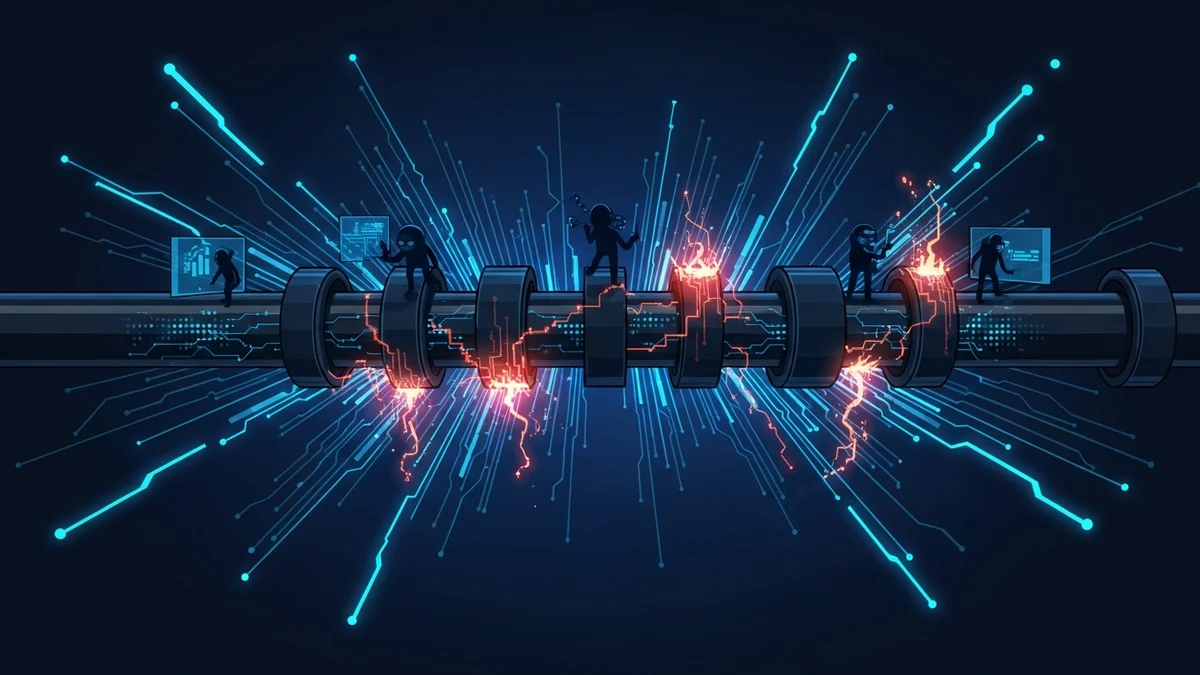
When you install a software update, integrate a new SaaS tool, or download a trusted app, you assume it’s safe. After all, it comes from a reputable vendor. But what if that vendor was compromised first?
That’s the core danger behind supply chain attacks—a fast-growing cyber threat where hackers infiltrate trusted software providers to distribute malware to thousands (or even millions) of downstream users. Instead of attacking one target directly, attackers poison the source everyone depends on.
In recent years, supply chain attacks have caused some of the most damaging breaches in history. Here’s how they work, why they’re so dangerous, and what you can do to reduce your risk.
What Is a Supply Chain Attack?
A supply chain attack occurs when cybercriminals compromise a third-party vendor, service provider, or software component to gain access to their customers. Rather than hacking you directly, they exploit the tools you already trust.
These attacks typically target:
- Software updates
- Open-source libraries
- IT service providers (MSPs)
- Cloud platforms and SaaS tools
- Hardware manufacturers
Because the malicious code is delivered through legitimate channels, it often bypasses traditional security controls. Firewalls and antivirus programs are less likely to flag a trusted vendor’s update.
The result? One compromised supplier can expose thousands of organizations in a single operation.
High-Profile Supply Chain Attack Examples
Supply chain attacks are not theoretical—they’ve caused massive real-world damage.
SolarWinds (2020): Perhaps the most infamous example, attackers inserted malicious code into a routine update for SolarWinds’ Orion IT management software. The update was distributed to approximately 18,000 customers, including U.S. government agencies and Fortune 500 companies. The breach remained undetected for months.
Kaseya (2021): A ransomware group exploited vulnerabilities in Kaseya’s remote management software, which IT providers used to manage client systems. The attack affected up to 1,500 businesses worldwide through managed service providers.
Log4j (2021): A critical vulnerability in the widely used open-source logging library Log4j put millions of applications at risk. Because the library was embedded in countless software products, organizations scrambled to identify whether they were exposed.
According to industry reports, supply chain attacks increased by over 600% in 2021 compared to the previous year. Attackers favor this method because it offers scale, stealth, and efficiency.
Why Supply Chain Attacks Are So Effective
Supply chain attacks succeed because they exploit trust.
Organizations carefully vet their security defenses—but they often assume their vendors have done the same. Once a trusted provider is compromised, the attacker inherits that trust.
Key reasons these attacks are effective include:
- Trusted distribution channels: Malicious updates appear legitimate and digitally signed.
- Widespread impact: One breach can cascade to thousands of customers.
- Delayed detection: Compromised code may remain dormant for weeks or months.
- Complex ecosystems: Modern software relies heavily on third-party and open-source components, increasing attack surfaces.
For individuals, the risk is indirect but real. If a service you use is compromised, your personal data—email address, passwords, billing details—could be exposed in a downstream breach.
How Supply Chain Breaches Lead to Data Exposure
Supply chain attacks often become large-scale data breaches.
For example, if attackers infiltrate a SaaS provider that stores customer credentials, they may exfiltrate login data or inject malware that harvests user information. Stolen credentials frequently appear later on dark web marketplaces.
This creates a domino effect:
- Compromised vendor
- Customer data stolen
- Credentials reused across other accounts
- Account takeovers and identity theft
Because many people reuse passwords, a single exposure can unlock multiple services. That’s why monitoring for breach exposure is critical. Tools like LeakDefend can monitor your email addresses for breaches and alert you if your data appears in known leaks—helping you respond before attackers escalate access.
How to Protect Yourself and Your Organization
You can’t control your vendors’ security practices—but you can reduce your exposure and improve your response.
For businesses:
- Vet vendors carefully and require security certifications or audit reports.
- Limit third-party access using least-privilege principles.
- Segment networks to prevent lateral movement.
- Continuously monitor for unusual activity after software updates.
- Maintain an inventory of third-party dependencies and open-source components.
For individuals:
- Use unique passwords for every account.
- Enable multi-factor authentication (MFA) wherever possible.
- Keep devices and applications updated.
- Monitor your email addresses for breach exposure.
Even if a trusted service suffers a supply chain compromise, strong password hygiene and MFA can prevent attackers from reusing stolen credentials elsewhere.
If you’re unsure whether your data has already been exposed, LeakDefend.com lets you check all your email addresses for free and receive alerts if they appear in known breaches.
Why Continuous Monitoring Matters
Supply chain attacks are difficult to predict and even harder to detect early. Organizations may not disclose incidents immediately, and investigations can take months.
That’s why proactive monitoring is essential. Instead of waiting for a breach announcement, individuals and businesses should continuously track whether their credentials surface in leaked databases.
Early detection allows you to:
- Reset compromised passwords quickly
- Enable or strengthen MFA
- Prevent account takeover attempts
- Reduce identity theft risk
In an era where even trusted software can become an attack vector, visibility into your digital exposure is no longer optional—it’s fundamental security hygiene.
🔒 Check If Your Email Was Breached — Monitor up to 3 email addresses for free with LeakDefend. Start Your Free Trial →
Conclusion
Supply chain attacks represent a shift in how cybercriminals operate. Instead of knocking on your front door, they compromise the companies you already trust and walk in through legitimate channels.
From SolarWinds to Log4j, recent incidents show that no organization is immune—not governments, not Fortune 500 companies, and not everyday users. As software ecosystems grow more interconnected, the risk surface expands.
You may not control the security practices of every vendor you rely on, but you can control how prepared you are when something goes wrong. Strong password practices, multi-factor authentication, and continuous breach monitoring with tools like LeakDefend dramatically reduce your personal risk.
In today’s threat landscape, trust is no longer enough. Verification—and vigilance—are essential.