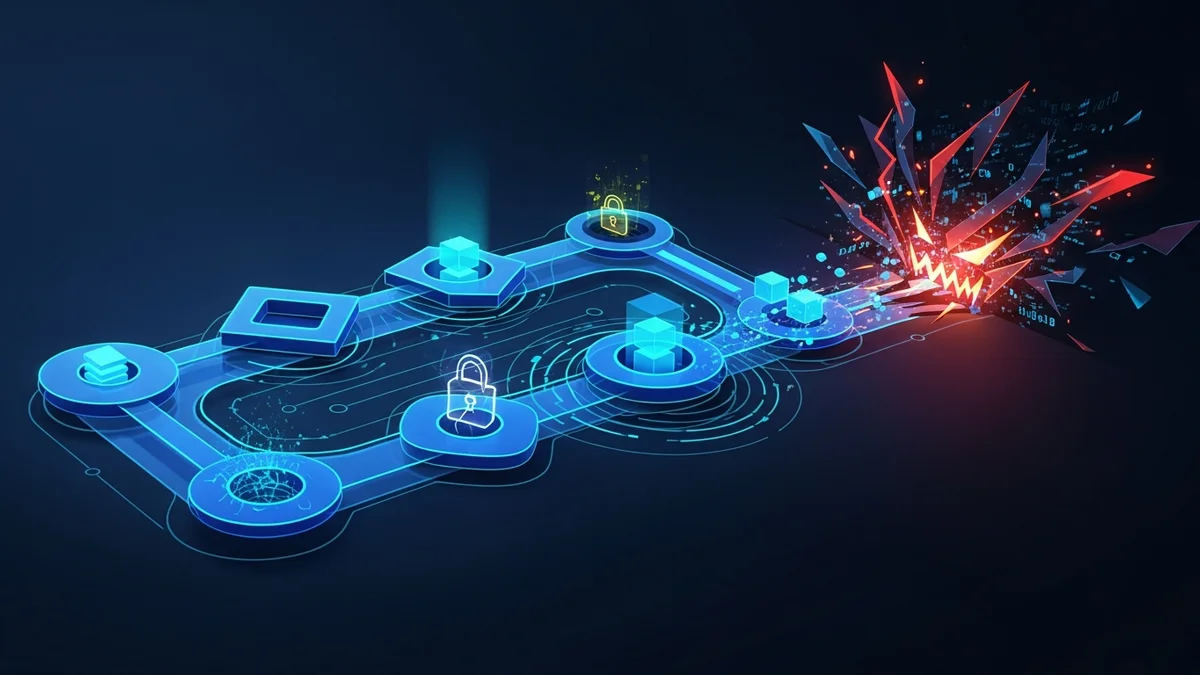
When you install a software update, you probably assume it’s safe. After all, it comes directly from a trusted vendor. But what if that vendor has already been compromised?
That’s the essence of a supply chain attack — hackers infiltrate a trusted company, software provider, or service platform and use that relationship to distribute malware to thousands (or even millions) of unsuspecting users. Instead of attacking individuals one by one, cybercriminals target the “supplier” and let trust do the rest.
In recent years, supply chain attacks have become one of the most dangerous and fast-growing cyber threats worldwide. Here’s how they work, why they’re so effective, and how you can reduce your risk.
What Is a Supply Chain Attack?
A supply chain attack occurs when attackers compromise a third-party vendor, service provider, or software component in order to reach their ultimate targets. Rather than breaching a well-defended company directly, hackers infiltrate a smaller or less-secure partner that has access to the main target’s systems.
Common supply chain attack vectors include:
- Software updates that are secretly modified to include malicious code
- Third-party libraries embedded in legitimate applications
- Managed service providers (MSPs) with privileged access to client networks
- Cloud-based platforms used by thousands of organizations
Because the malicious code comes from a trusted source, victims often install it without hesitation. Traditional security tools may also fail to detect it, since the software appears legitimate and digitally signed.
Real-World Examples of Devastating Supply Chain Attacks
Supply chain attacks are not theoretical — they’ve caused some of the most significant cybersecurity incidents in history.
SolarWinds (2020): Attackers inserted malicious code into a routine software update for SolarWinds Orion, an IT management platform used by approximately 18,000 customers. U.S. government agencies and Fortune 500 companies were among those affected. The breach went undetected for months.
Kaseya (2021): A ransomware group exploited vulnerabilities in Kaseya’s remote management software, which was used by managed service providers. The attack impacted up to 1,500 businesses worldwide in a single coordinated campaign.
MOVEit (2023): A vulnerability in the MOVEit file transfer platform was exploited by the Clop ransomware group. The attack affected hundreds of organizations and exposed sensitive data belonging to millions of individuals, including government agencies and major corporations.
These incidents demonstrate a key pattern: by compromising one trusted platform, attackers can scale their impact dramatically.
Why Supply Chain Attacks Are So Effective
Supply chain attacks succeed because they exploit trust — both human and technical.
- Implicit trust in vendors: Organizations rarely question routine updates from established providers.
- Wide distribution: A single compromised vendor can expose thousands of downstream customers.
- Delayed detection: Malicious updates often appear legitimate and signed with authentic certificates.
- Privileged access: Vendors and IT management tools often have deep system-level access.
According to industry research, software supply chain attacks increased more than 700% between 2019 and 2022. As businesses rely more heavily on SaaS platforms and cloud services, the attack surface continues to expand.
For individuals, the danger often becomes apparent only after a data breach occurs — when login credentials, personal information, or financial details are exposed. That’s why proactive monitoring is critical. Tools like LeakDefend can monitor your email addresses for breach exposure and alert you if your information appears in leaked databases.
How Supply Chain Attacks Impact Individuals
While headlines focus on corporations, everyday users are often the ultimate victims. If a service you use suffers a supply chain breach, your data may be exposed without you ever knowing how it happened.
Consequences can include:
- Credential leaks that lead to account takeovers
- Identity theft using exposed personal information
- Phishing campaigns targeting affected users
- Financial fraud through reused passwords
For example, if a payroll provider or cloud storage service is compromised via a third-party component, employee records and customer data may be leaked. Attackers frequently sell this information on dark web marketplaces.
This is where continuous monitoring matters. LeakDefend.com lets you check all your email addresses for free and track whether they appear in newly discovered data breaches — including those resulting from supply chain incidents.
How Organizations Can Reduce Supply Chain Risk
Businesses must take proactive steps to reduce exposure to supply chain attacks:
- Vendor risk assessments: Regularly evaluate the security posture of third-party providers.
- Zero-trust architecture: Avoid automatically trusting internal or vendor systems.
- Software bill of materials (SBOM): Track components and dependencies within applications.
- Strict access controls: Limit vendor privileges to only what is necessary.
- Continuous monitoring: Detect unusual behavior across networks and systems.
No organization can eliminate third-party risk entirely, but transparency and layered defenses significantly reduce exposure.
How You Can Protect Yourself
Even if you’re not an IT professional, there are practical steps you can take to stay safer:
- Use unique passwords for every account to prevent credential stuffing.
- Enable multi-factor authentication (MFA) wherever possible.
- Monitor your accounts for unusual login activity.
- Regularly check for data breaches affecting your email addresses.
Supply chain attacks often surface months after the initial compromise. By then, stolen data may already be circulating online. Early detection gives you the chance to change passwords, freeze credit, or secure accounts before criminals exploit your information.
Services like LeakDefend provide automated breach monitoring so you don’t have to manually search the web for signs of exposure.
🔒 Check If Your Email Was Breached — Monitor up to 3 email addresses for free with LeakDefend. Start Your Free Trial →
Trust, But Verify
Supply chain attacks are powerful because they weaponize trust. By infiltrating the software and services we rely on every day, hackers can bypass traditional defenses and reach massive numbers of victims at once.
While organizations must strengthen vendor oversight and software integrity, individuals also play a role in minimizing damage. Strong password hygiene, multi-factor authentication, and proactive breach monitoring can dramatically reduce the fallout from these attacks.
You may not control the security of the companies you trust — but you can control how quickly you respond if your data is exposed. Staying informed and monitoring your digital footprint is no longer optional in a world where even trusted software can become an attack vector.