Passwords alone are no longer enough to protect your online accounts. With billions of stolen credentials circulating on the dark web, attackers can break into accounts using leaked passwords, phishing attacks, and automated tools in seconds. That’s where multi-factor authentication (MFA) comes in.
If you’ve ever received a text message with a login code or approved a sign-in request through an app, you’ve already used MFA. But what exactly is multi-factor authentication, and why does it matter so much today? Let’s break it down.
What Is Multi-Factor Authentication (MFA)?
Multi-factor authentication is a security method that requires users to provide two or more verification factors to access an account. Instead of relying solely on a password, MFA adds extra layers of protection.
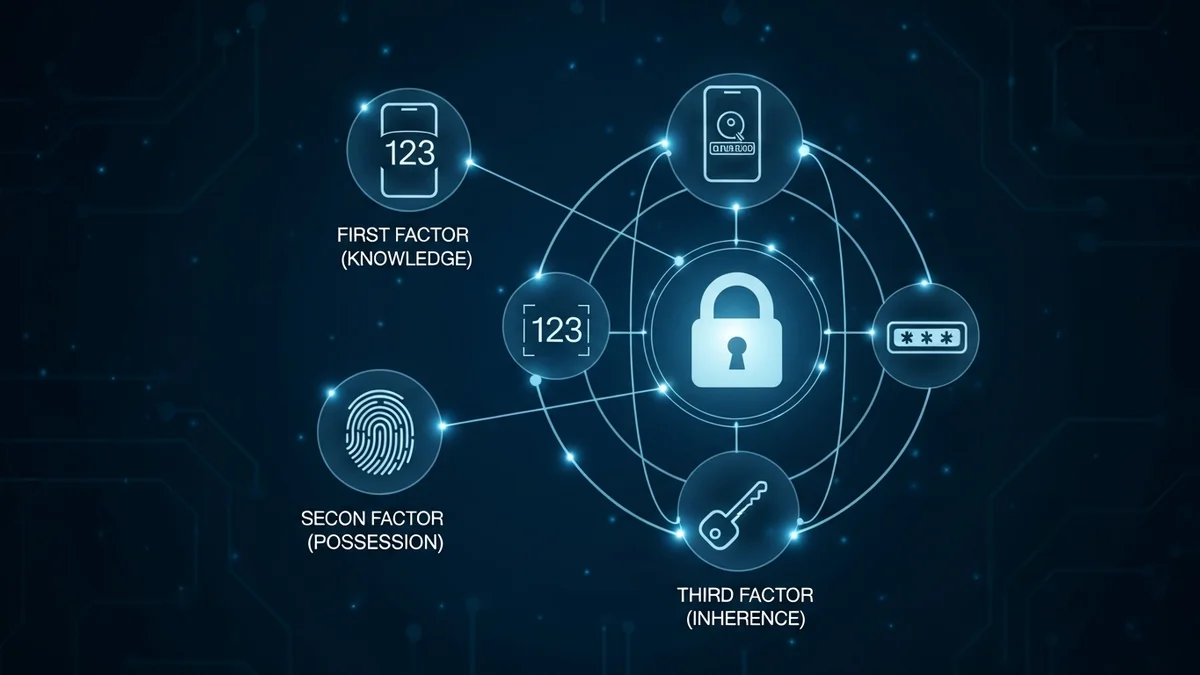
Authentication factors typically fall into three categories:
- Something you know – A password, PIN, or security question.
- Something you have – A smartphone, authentication app, hardware token, or SMS code.
- Something you are – Biometric data such as a fingerprint, facial recognition, or retina scan.
When you combine at least two of these factors, you significantly reduce the chances of unauthorized access. Even if a cybercriminal steals your password, they still can’t log in without the second factor.
Why Passwords Alone Are No Longer Safe
For years, passwords were the primary line of defense. Today, they’re one of the weakest.
According to Verizon’s Data Breach Investigations Report, over 80% of hacking-related breaches involve stolen or weak passwords. Massive data breaches have exposed billions of credentials over the past decade. For example:
- The Yahoo breach exposed 3 billion accounts.
- The LinkedIn breach leaked over 700 million user records.
- The 2019 Collection #1 breach distributed more than 773 million unique email and password combinations.
Once passwords are leaked, attackers use automated tools in “credential stuffing” attacks, trying those same combinations across banking, email, streaming, and shopping platforms. If you reuse passwords — and most people do — multiple accounts can fall quickly.
This is why monitoring tools like LeakDefend are critical. When your email appears in a breach database, attackers may already be targeting you. LeakDefend.com lets you check all your email addresses for free and alerts you if your credentials show up in known leaks.
How Multi-Factor Authentication Stops Common Attacks
MFA is effective because it breaks the attack chain. Here’s how it protects you against common threats:
- Credential stuffing: Even if attackers have your password, they can’t access your account without the second factor.
- Phishing: If you accidentally enter your password on a fake website, the attacker still needs your authentication code or biometric verification.
- Brute-force attacks: Automated password guessing becomes useless without the second verification step.
Microsoft has stated that enabling MFA can block over 99.9% of automated account compromise attacks. That’s an enormous security improvement for such a simple step.
While MFA isn’t perfect — advanced phishing kits can sometimes intercept SMS codes — it dramatically reduces your risk compared to password-only protection.
Types of Multi-Factor Authentication Methods
Not all MFA methods offer the same level of security. Here are the most common options, ranked from basic to stronger protection:
- SMS codes: A one-time code sent via text message. Better than nothing, but vulnerable to SIM-swapping attacks.
- Email-based codes: Sent to your inbox. Less secure if your email account itself is compromised.
- Authenticator apps: Apps like Google Authenticator or Authy generate time-based one-time passwords (TOTP). More secure than SMS.
- Push notifications: Approve or deny login attempts directly in an app.
- Hardware security keys: Physical devices like YubiKey provide strong, phishing-resistant protection.
- Biometrics: Fingerprint or facial recognition adds convenience and security when combined with another factor.
Whenever possible, choose app-based authentication or hardware keys over SMS. The stronger the second factor, the harder it is for attackers to bypass.
Why MFA Matters Even If You’re “Not a Target”
Many people believe hackers only go after celebrities, executives, or wealthy individuals. In reality, most cyberattacks are automated and indiscriminate. Bots scan the internet constantly, looking for vulnerable accounts.
Your email account alone can unlock access to:
- Banking and financial apps
- Online shopping accounts
- Cloud storage
- Social media profiles
- Subscription services
If an attacker gains access to your email, they can reset passwords across multiple platforms within minutes. MFA acts as a barrier that stops this chain reaction.
However, security doesn’t stop at enabling MFA. You also need visibility. If your email address has already been exposed in a breach, your accounts are at higher risk. Tools like LeakDefend continuously monitor breach databases and alert you when your information appears, giving you time to update passwords and enable stronger protections.
Best Practices for Using Multi-Factor Authentication
To maximize your protection, follow these practical steps:
- Enable MFA on your email account first — it’s your most critical account.
- Use an authenticator app instead of SMS whenever possible.
- Set up backup codes and store them securely.
- Use unique, strong passwords alongside MFA.
- Regularly monitor your email addresses for data breaches.
Combining strong passwords, MFA, and breach monitoring creates layered security. If one defense fails, the others remain in place.
🔒 Check If Your Email Was Breached — Monitor up to 3 email addresses for free with LeakDefend. Start Your Free Trial →
Conclusion: MFA Is No Longer Optional
Multi-factor authentication is one of the simplest and most effective ways to protect your online accounts. In a world where billions of passwords are already exposed, relying on a single layer of security is a serious risk.
MFA dramatically reduces the likelihood of unauthorized access, blocks most automated attacks, and protects you even if your password is compromised. When combined with proactive breach monitoring from services like LeakDefend, you gain both prevention and early detection — a powerful combination against modern cyber threats.
Cybersecurity doesn’t have to be complicated. Start by enabling multi-factor authentication on your most important accounts today. Your future self will thank you.