Biometric authentication has rapidly moved from science fiction to everyday life. You unlock your phone with your face, access banking apps with your fingerprint, and pass through airport gates using facial recognition. Tech companies promote biometrics as a safer, faster alternative to passwords — but are they truly more secure?
Understanding the pros and cons of biometric authentication is critical before trusting it with your most sensitive data. While biometrics can dramatically improve convenience and reduce password fatigue, they also introduce unique privacy and security risks that many users overlook.
What Is Biometric Authentication?
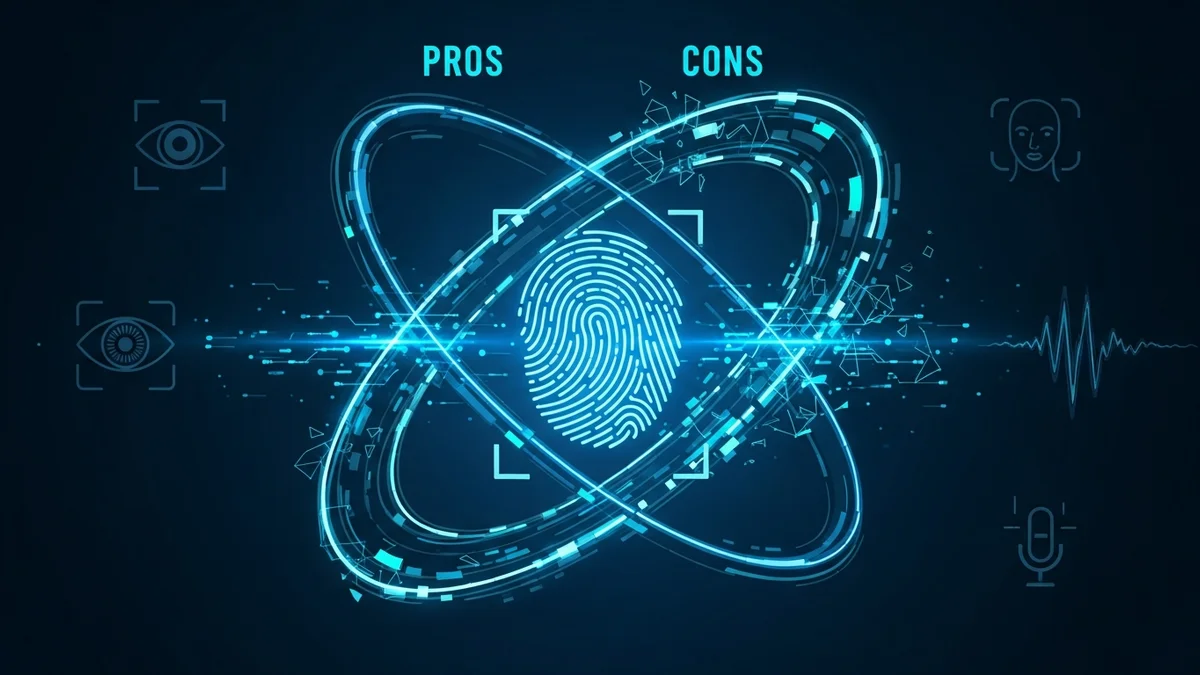
Biometric authentication verifies identity using unique biological traits. The most common types include:
- Fingerprint recognition
- Facial recognition
- Iris or retina scans
- Voice recognition
- Behavioral biometrics (typing patterns, gait, device interaction)
Instead of remembering a password, users provide something they are. According to a 2023 report by the FIDO Alliance, over 80% of consumers have used biometric authentication on a mobile device, and most consider it more convenient than passwords.
But convenience does not automatically equal security.
The Pros of Biometric Authentication
1. Convenience and Speed
Biometrics eliminate the need to remember complex passwords. A fingerprint scan takes seconds, and facial recognition can unlock devices almost instantly. This reduces "password fatigue" — a major contributor to weak or reused passwords.
2. Reduced Risk of Credential Theft
Traditional passwords can be stolen through phishing attacks, keylogging malware, or massive data breaches. In contrast, biometric data isn’t something you type into a fake website. This makes common phishing attacks less effective.
Given that Verizon’s annual Data Breach Investigations Report consistently finds that over 80% of breaches involve stolen or weak credentials, reducing reliance on passwords is a significant security benefit.
3. Difficult to Replicate (In Most Cases)
High-quality biometric systems use liveness detection and advanced sensors to prevent spoofing. Modern smartphones, for example, map thousands of facial data points rather than relying on a simple 2D photo.
While early fingerprint scanners were vulnerable to lifted prints, today’s hardware is far more resilient against basic forgery attempts.
4. Enables Strong Multi-Factor Authentication (MFA)
Biometrics work best when combined with other factors — such as device possession or a PIN. This layered approach significantly reduces the chances of unauthorized access. Many banking apps now use biometrics as one factor within a broader authentication system.
The Cons of Biometric Authentication
1. You Can’t Change Your Fingerprint
If your password is exposed in a data breach, you can reset it. If your fingerprint or facial template is compromised, you cannot replace your biological identity.
This is one of the biggest long-term risks. In 2019, the U.S. Customs and Border Protection agency suffered a breach exposing facial recognition images of travelers. While the agency stated the system itself was not compromised, the incident highlighted the sensitivity of biometric data.
2. Biometric Databases Are Attractive Targets
Centralized biometric databases are highly valuable to attackers. In 2015, the U.S. Office of Personnel Management (OPM) breach exposed over 5.6 million federal employees’ fingerprint records. Unlike passwords, those fingerprints cannot be revoked.
When biometric systems rely on cloud storage or centralized databases, the stakes become much higher.
3. False Positives and False Negatives
No biometric system is perfect. Systems operate using statistical thresholds:
- False acceptance rate (FAR): incorrectly granting access
- False rejection rate (FRR): denying legitimate users
Environmental conditions, injuries, aging, or identical twins can affect accuracy. While high-end systems boast error rates below 0.1%, even small percentages can matter at scale.
4. Privacy Concerns and Surveillance Risks
Facial recognition, in particular, raises concerns about mass surveillance. Civil liberties organizations have warned that widespread biometric tracking could erode anonymity in public spaces. Several cities worldwide have imposed restrictions on government use of facial recognition technology due to these concerns.
Are Biometrics Safer Than Passwords?
The answer is nuanced.
Biometrics are generally safer than weak or reused passwords. However, they are not inherently safer than strong, unique passwords combined with multi-factor authentication.
Importantly, most biometric systems on smartphones do not transmit your raw fingerprint or face scan to servers. Instead, they store encrypted templates locally in secure hardware enclaves. This dramatically reduces risk compared to centralized storage.
However, biometrics do not protect you from all threats. If your email account password is exposed in a breach, attackers can still reset other accounts, bypass security questions, or launch phishing campaigns against you.
This is why proactive breach monitoring remains essential. Tools like LeakDefend can monitor your email addresses and alert you if they appear in known data breaches, allowing you to act quickly before attackers exploit exposed credentials.
Best Practices for Using Biometric Authentication Safely
- Use biometrics as part of MFA, not as your only protection.
- Enable a strong backup PIN or passcode in case biometric authentication fails.
- Avoid storing biometric data in centralized systems when possible.
- Keep devices updated to ensure the latest security patches.
- Monitor your email accounts for breaches since compromised credentials can still undermine your security.
Even the strongest authentication method can be weakened if your underlying accounts are already exposed. LeakDefend.com lets you check all your email addresses for free and track future breaches in real time, adding an important layer of defense beyond biometrics alone.
🔒 Check If Your Email Was Breached — Monitor up to 3 email addresses for free with LeakDefend. Start Your Free Trial →
Conclusion: Powerful, But Not Perfect
The pros and cons of biometric authentication show a clear pattern: biometrics dramatically improve usability and reduce reliance on passwords, but they are not a silver bullet.
They shine when used locally on personal devices and combined with multi-factor authentication. They become risky when stored in large centralized databases or used without additional safeguards.
Ultimately, strong security requires layers. Biometrics can protect your device. Strong passwords protect your accounts. Breach monitoring tools like LeakDefend help you detect when your information has already been exposed.
No single method guarantees safety — but informed decisions and layered defenses significantly reduce your risk in an increasingly digital world.