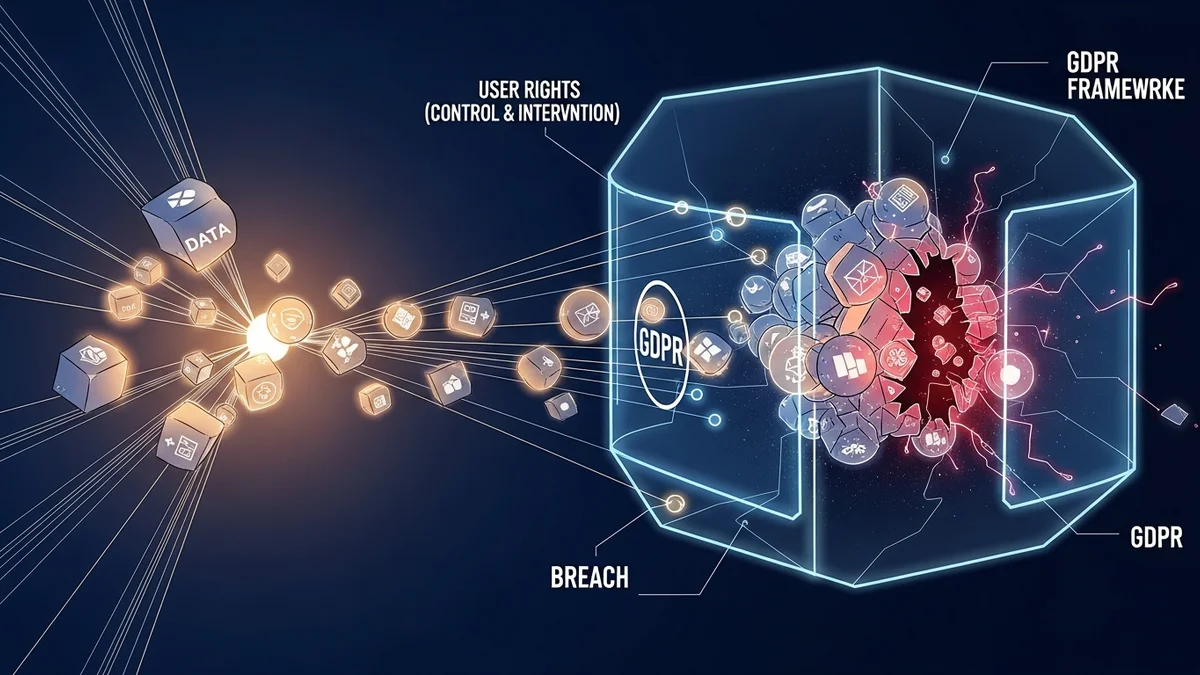
Data breaches are no longer rare events. From social media giants to healthcare providers, organizations across the world have exposed billions of personal records. If you live in the European Union — or if a company processes your data while offering services in the EU — the General Data Protection Regulation (GDPR) gives you powerful rights when your personal data is compromised.
But what exactly is GDPR, and what are you entitled to if your data is breached? Here’s a clear, practical guide to understanding your rights and how to use them.
What Is GDPR?
The General Data Protection Regulation (GDPR) is a comprehensive data protection law that came into effect on May 25, 2018. It applies to all organizations that process personal data of individuals in the European Union, regardless of where the organization is based.
GDPR was designed to give individuals more control over their personal data and to hold companies accountable for how they collect, store, and use it.
Under GDPR, companies must:
- Process data lawfully, fairly, and transparently
- Collect only the data necessary for a specific purpose
- Keep data accurate and up to date
- Protect data with appropriate security measures
- Report certain data breaches within strict deadlines
Organizations that fail to comply can face severe penalties — up to €20 million or 4% of global annual turnover, whichever is higher. Major companies like British Airways and Marriott have faced multimillion-euro GDPR fines following large-scale breaches.
What Counts as a Personal Data Breach?
Under GDPR, a personal data breach is any security incident that leads to the accidental or unlawful destruction, loss, alteration, unauthorized disclosure of, or access to personal data.
This includes:
- Hacked databases exposing email addresses and passwords
- Ransomware attacks locking sensitive files
- Lost or stolen laptops containing customer data
- Misconfigured cloud storage exposing records online
Personal data can include names, email addresses, phone numbers, IP addresses, financial information, health records, and more. Even something as simple as an email-password combination exposed in a breach can put you at risk of identity theft or account takeover.
Your Right to Be Notified
One of the most important protections under GDPR is the right to be informed.
If a breach is likely to result in a risk to your rights and freedoms, the organization must notify the relevant data protection authority within 72 hours of becoming aware of it.
If the breach poses a high risk to you — such as exposing financial details or login credentials — the company must also inform you directly without undue delay.
The notification should clearly explain:
- What happened
- What types of data were affected
- The likely consequences
- What steps are being taken
- What you can do to protect yourself
If you were never informed about a breach involving your data, the organization may be in violation of GDPR.
Your Key GDPR Rights After a Data Breach
GDPR provides several enforceable rights that become especially important after a breach.
1. Right of Access
You can request confirmation of whether a company is processing your personal data and ask for a copy of it. This is known as a Data Subject Access Request (DSAR). The organization must respond within one month.
2. Right to Rectification
If your data is inaccurate or incomplete, you can demand corrections. Inaccurate data can worsen the damage after a breach.
3. Right to Erasure (Right to Be Forgotten)
You can request that your personal data be deleted if there is no legitimate reason for the company to continue processing it. This can reduce your exposure after an incident.
4. Right to Restrict Processing
You may ask a company to temporarily stop using your data while disputes are resolved.
5. Right to Data Portability
You can request your data in a structured, machine-readable format and transfer it to another provider.
6. Right to Compensation
If you suffer material damage (such as financial loss) or non-material damage (such as distress) due to a GDPR violation, you may be entitled to compensation.
Real-World Examples of GDPR in Action
Since 2018, regulators have issued billions of euros in fines for GDPR violations. For example:
- British Airways was fined £20 million after a 2018 breach exposed the personal and financial details of over 400,000 customers.
- Marriott International faced a £18.4 million fine for a breach affecting approximately 339 million guest records globally.
These cases show that regulators take breach reporting and data protection failures seriously — and that companies are legally accountable for protecting your data.
How to Protect Yourself After a Breach
Even with GDPR protections, you should take immediate action if your data is exposed:
- Change affected passwords immediately
- Enable two-factor authentication wherever possible
- Monitor financial accounts for suspicious activity
- Be cautious of phishing emails referencing the breach
Proactive monitoring is equally important. Tools like LeakDefend can monitor your email addresses for breaches and alert you when your information appears in leaked databases. Early detection significantly reduces the risk of account takeover and identity fraud.
LeakDefend.com lets you check all your email addresses for free and track new exposures over time, giving you visibility that many companies fail to provide proactively.
🔒 Check If Your Email Was Breached — Monitor up to 3 email addresses for free with LeakDefend. Start Your Free Trial →
What to Do If a Company Violates GDPR
If you believe a company failed to notify you properly or mishandled your data, you can file a complaint with your country’s data protection authority. Every EU member state has an independent supervisory authority responsible for enforcing GDPR.
You also have the right to seek judicial remedy and, in some cases, collective legal action. Organizations are required to cooperate with regulators and demonstrate compliance through documentation and security measures.
Conclusion
GDPR fundamentally changed the balance of power between individuals and organizations. It gives you the right to know when your data is breached, access the information companies hold about you, demand corrections or deletion, and even claim compensation if your rights are violated.
But legal rights are only part of the equation. With cyberattacks increasing every year and billions of records exposed globally, staying vigilant is essential. Monitoring services like LeakDefend add an extra layer of protection by helping you detect breaches early and act quickly.
Understanding your GDPR rights empowers you to hold organizations accountable — and to take control of your digital privacy when it matters most.