Data breaches have become a regular headline. From Facebook exposing data on over 530 million users to the British Airways breach that affected 400,000 customers, personal information is constantly at risk. But if your data is compromised, what protections do you actually have?
This is where the General Data Protection Regulation (GDPR) comes in. Introduced by the European Union in 2018, GDPR is one of the strongest privacy laws in the world. It gives individuals significant control over their personal data — and imposes heavy penalties on organizations that fail to protect it.
If you’ve ever received an email saying, “We regret to inform you that your data may have been compromised,” understanding GDPR can help you know exactly what to do next.
What Is GDPR?
The General Data Protection Regulation (GDPR) is a comprehensive data protection law that applies to all organizations handling the personal data of EU residents — regardless of where the company is located. That means even U.S., UK, or global companies must comply if they process data belonging to people in the EU.
GDPR regulates how organizations collect, store, process, and share personal data. Personal data includes:
- Names and email addresses
- Passwords and login credentials
- IP addresses and device identifiers
- Financial information
- Health or biometric data
Companies that fail to comply can face massive fines — up to €20 million or 4% of annual global turnover, whichever is higher. For example, Amazon was fined €746 million in 2021 for GDPR violations related to data processing practices.
The goal is simple: give people more control over their data and hold companies accountable when they misuse or expose it.
What Counts as a Data Breach Under GDPR?
Under GDPR, a personal data breach is any security incident that leads to the accidental or unlawful destruction, loss, alteration, unauthorized disclosure of, or access to personal data.
This includes:
- Hackers stealing customer databases
- Ransomware attacks locking systems
- Employees emailing sensitive data to the wrong recipient
- Lost or stolen devices containing unencrypted data
Importantly, companies must notify the relevant data protection authority within 72 hours of becoming aware of a breach — unless it is unlikely to result in risk to individuals. If the breach poses a high risk to your rights and freedoms, they must also inform you directly without undue delay.
If you were not informed about a breach affecting you, that alone could be a compliance issue.
Your Rights Under GDPR After a Data Breach
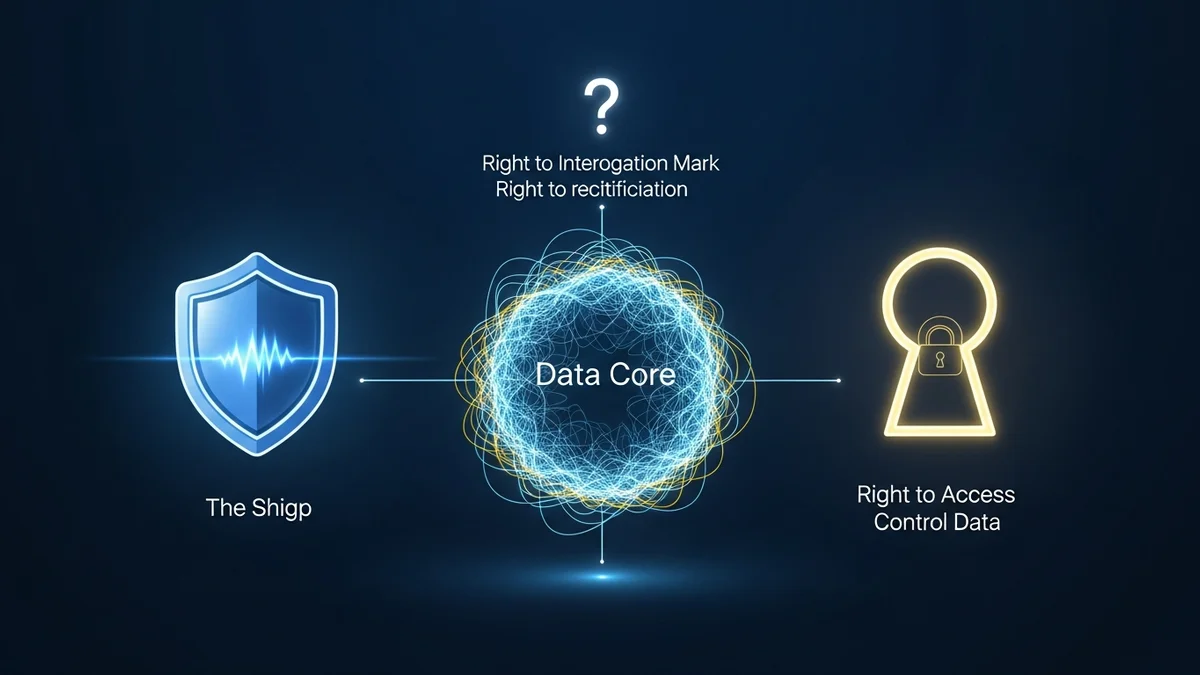
GDPR provides several powerful rights that apply before and after a breach occurs.
1. The Right to Be Informed
You have the right to know how your data is being used and whether it has been exposed. If a breach creates significant risk (such as identity theft or fraud), the company must notify you clearly and promptly.
2. The Right of Access
You can request a copy of the personal data a company holds about you. This is known as a Data Subject Access Request (DSAR). Companies must respond within one month.
3. The Right to Rectification
If your personal information is inaccurate or incomplete, you can require the organization to correct it.
4. The Right to Erasure (“Right to Be Forgotten”)
In certain circumstances, you can ask a company to delete your personal data — particularly if it is no longer necessary for the purpose it was collected.
5. The Right to Restrict Processing
You can request that a company temporarily stop processing your data while a dispute is resolved.
6. The Right to Compensation
If you suffer material damage (financial loss) or non-material damage (emotional distress) due to a GDPR violation, you have the right to seek compensation.
These rights are enforceable. Supervisory authorities across Europe regularly investigate complaints and impose penalties.
Can You Claim Compensation After a Breach?
Yes. GDPR explicitly allows individuals to seek compensation if a company fails to protect their personal data.
Courts have increasingly supported claims for non-material damage. In 2023, the Court of Justice of the European Union clarified that individuals do not need to prove serious harm — even emotional distress may qualify for compensation.
For example, following the British Airways breach in 2018, affected individuals pursued group litigation claims alleging insufficient security measures.
If your financial details, passwords, or identity information were exposed, you may have grounds to:
- File a complaint with your national data protection authority
- Join a collective legal action
- Pursue an individual compensation claim
Documenting evidence — such as breach notifications, fraudulent transactions, or identity misuse — strengthens your case.
What Should You Do If Your Data Is Breached?
If you receive a breach notification, act quickly:
- Change your passwords immediately, especially if reused elsewhere.
- Enable two-factor authentication (2FA) on critical accounts.
- Monitor bank accounts and credit reports for suspicious activity.
- Be alert to phishing emails exploiting the breach.
Many breaches surface months or even years after they occur. Tools like LeakDefend can monitor your email addresses against known breach databases and alert you if your data appears in newly discovered leaks.
LeakDefend.com lets you check multiple email addresses and track exposure over time — an essential step because attackers often use old breach data in new phishing or credential-stuffing attacks.
Early detection significantly reduces the risk of identity theft and account takeovers.
Why GDPR Still Matters — Even Outside the EU
Even if you don’t live in the EU, GDPR has influenced privacy laws worldwide. Regulations like the California Consumer Privacy Act (CCPA) and Brazil’s LGPD share similar principles.
Many global companies apply GDPR standards across all users to simplify compliance. That means you may benefit from GDPR-level protections even if you’re outside Europe.
However, legal rights are only part of the solution. Cybercrime continues to grow. According to IBM’s 2023 Cost of a Data Breach Report, the global average cost of a breach reached $4.45 million, the highest on record. More breaches mean more exposed credentials circulating online.
Proactive monitoring is becoming just as important as legal protection.
🔒 Check If Your Email Was Breached — Monitor up to 3 email addresses for free with LeakDefend. Start Your Free Trial →
Conclusion: Know Your Rights, Protect Your Data
GDPR is more than a regulation — it’s a framework designed to put control back into your hands. If your data is breached, you have the right to be informed, to access your data, to request deletion, and even to seek compensation.
But legal rights don’t undo exposure. The reality is that once data is leaked, it can circulate indefinitely across underground forums and dark web marketplaces.
That’s why combining awareness of your GDPR rights with proactive monitoring is critical. Staying informed, acting quickly after breaches, and using tools like LeakDefend to track your exposure can significantly reduce your long-term risk.
Your data has value. GDPR ensures companies respect that — and gives you the power to act when they don’t.