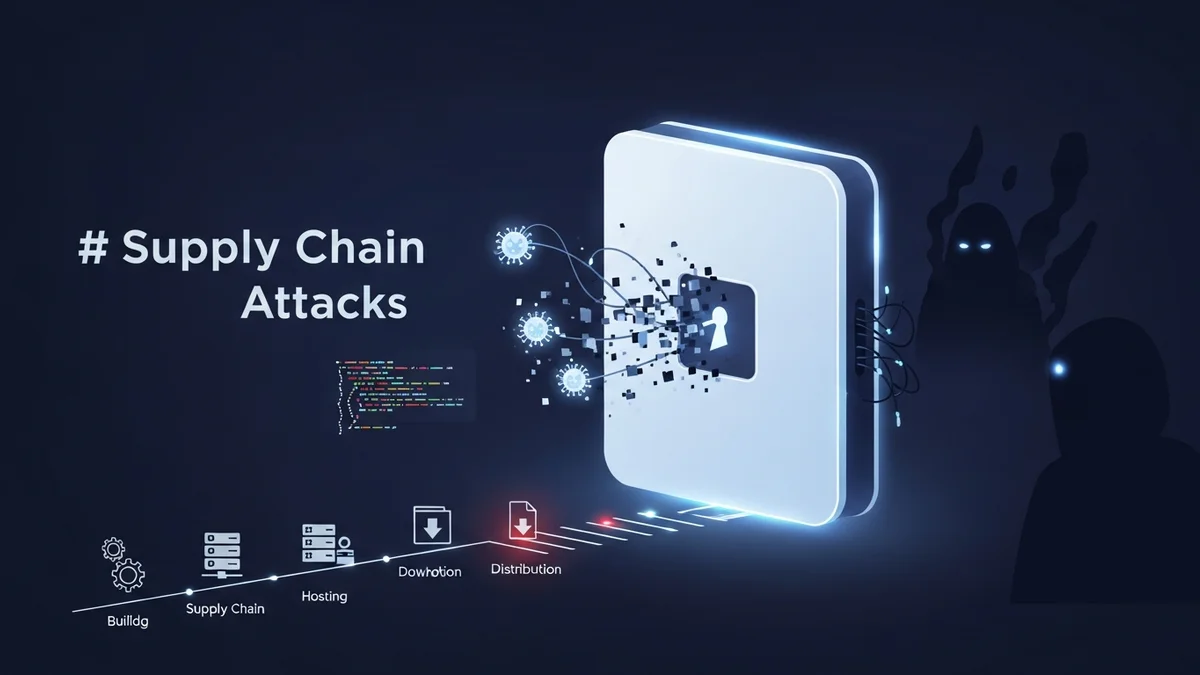
When you install a software update, you expect better performance and improved security—not a hidden backdoor for hackers. Yet that’s exactly what happens in a supply chain attack. Instead of targeting victims directly, cybercriminals compromise trusted software vendors, service providers, or third-party components to infect thousands of organizations at once.
In recent years, supply chain attacks have surged in frequency and sophistication. From government agencies to Fortune 500 companies, no organization is immune. Understanding how these attacks work—and how to reduce your exposure—is critical for both businesses and individuals.
What Is a Supply Chain Attack?
A supply chain attack occurs when attackers infiltrate a trusted third-party provider to distribute malware or gain unauthorized access to downstream customers. Rather than hacking each target individually, criminals compromise one supplier and use that access as a launchpad.
Common targets include:
- Software vendors and update servers
- Managed service providers (MSPs)
- Open-source libraries and dependencies
- Cloud service platforms
- Hardware manufacturers
Because the malicious code is delivered through legitimate channels—such as official updates or signed software—traditional security tools often fail to detect it. The trust relationship between vendor and customer becomes the attack vector.
High-Profile Supply Chain Attack Examples
Several major breaches have demonstrated the devastating reach of supply chain compromises.
SolarWinds (2020): Attackers inserted malicious code into updates of SolarWinds’ Orion IT management software. Approximately 18,000 customers downloaded the compromised update, including U.S. federal agencies and major corporations. The breach went undetected for months and is considered one of the most significant cyber-espionage campaigns in history.
Kaseya (2021): A ransomware group exploited vulnerabilities in Kaseya’s VSA remote management software, affecting around 1,500 businesses worldwide. By targeting a single IT service provider platform, attackers amplified their impact dramatically.
CCleaner (2017): Hackers compromised the software distribution system for the popular utility tool CCleaner, infecting more than 2 million users with malware before detection.
According to industry research, supply chain attacks increased by over 600% between 2020 and 2022. The growing reliance on third-party software and open-source components has dramatically expanded the attack surface.
Why Supply Chain Attacks Are So Effective
Supply chain attacks succeed because they exploit trust. Organizations carefully vet vendors, but once trust is established, ongoing verification is often limited.
Several factors make these attacks particularly dangerous:
- Scale: One compromised vendor can expose thousands of customers.
- Stealth: Malicious updates may be digitally signed and appear legitimate.
- Delayed detection: Attacks can remain hidden for months.
- Complex ecosystems: Modern applications rely on dozens or even hundreds of third-party components.
For individuals, the risk is less visible but still real. If a service you use suffers a supply chain breach, your email address, login credentials, or payment data could be exposed. Tools like LeakDefend can monitor your email addresses for breaches and alert you quickly if your information appears in leaked databases.
How Hackers Compromise the Software Supply Chain
Attackers use several methods to infiltrate trusted vendors:
- Compromising build systems: Gaining access to a company’s development environment to insert malicious code before software is compiled.
- Hijacking update mechanisms: Manipulating official update servers to distribute infected versions.
- Exploiting open-source dependencies: Injecting malicious packages into widely used code repositories.
- Credential theft: Using stolen employee credentials to access internal systems.
In many cases, attackers conduct extensive reconnaissance before striking. They study internal documentation, identify key engineers, and patiently wait for the right opportunity to inject malware without triggering alarms.
Once inside customer networks, attackers may deploy ransomware, steal intellectual property, harvest credentials, or establish long-term espionage footholds.
How Organizations Can Reduce Supply Chain Risk
While no defense is perfect, organizations can significantly lower their risk by adopting proactive measures:
- Vendor risk assessments: Regularly evaluate third-party security practices.
- Zero trust architecture: Verify every connection and limit access privileges.
- Software bill of materials (SBOM): Maintain visibility into all components used in applications.
- Code integrity monitoring: Verify digital signatures and detect unauthorized modifications.
- Incident response planning: Prepare for rapid containment if a vendor breach occurs.
Government agencies are increasingly mandating stricter supply chain security standards. In the United States, Executive Order 14028 emphasizes improving the nation’s cybersecurity, including stronger software supply chain protections.
What Individuals Can Do to Stay Protected
Even if you’re not managing enterprise software, supply chain breaches can still affect you. When a popular app or service is compromised, user data often ends up for sale on dark web marketplaces.
To reduce your personal risk:
- Enable automatic updates to receive security patches quickly.
- Use unique, strong passwords for every account.
- Enable multi-factor authentication wherever possible.
- Monitor your accounts for suspicious activity.
- Regularly check if your email addresses have been exposed in breaches.
LeakDefend.com lets you check all your email addresses for free and monitor up to three accounts continuously. Early detection allows you to change passwords and secure accounts before attackers exploit stolen data.
Supply chain attacks often lead to secondary breaches months later, as criminals reuse stolen credentials. Continuous monitoring adds an extra layer of defense.
🔒 Check If Your Email Was Breached — Monitor up to 3 email addresses for free with LeakDefend. Start Your Free Trial →
The Future of Supply Chain Security
As software ecosystems grow more interconnected, supply chain security will remain a top concern. Artificial intelligence is helping defenders detect anomalies faster—but attackers are also using AI to automate reconnaissance and craft more convincing phishing campaigns to steal developer credentials.
The key shift underway is moving from blind trust to continuous verification. Organizations are demanding greater transparency from vendors, and users are becoming more aware of the risks tied to their digital dependencies.
Ultimately, supply chain attacks remind us that cybersecurity is only as strong as the weakest link. Whether you’re running a global enterprise or managing personal accounts, staying informed and proactive is essential. Monitoring services like LeakDefend, practicing strong credential hygiene, and choosing reputable vendors all contribute to reducing your exposure.
In a world where even trusted software can become a threat vector, vigilance is no longer optional—it’s a necessity.