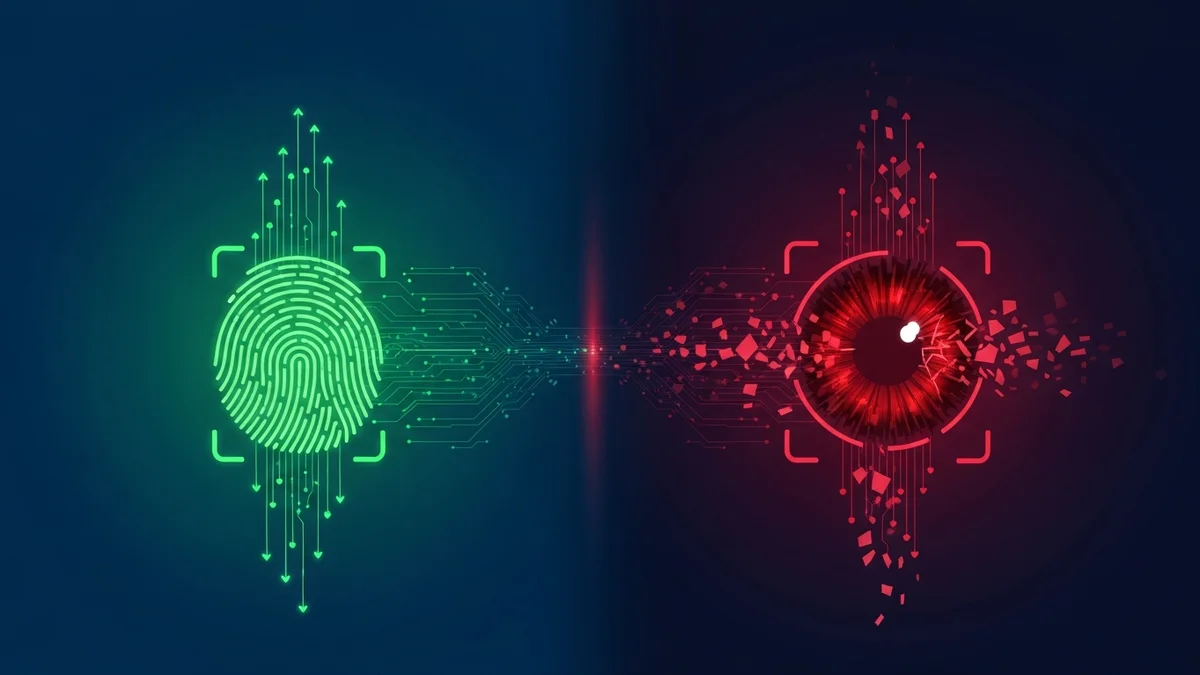
Biometric authentication has rapidly moved from science fiction to everyday life. We unlock smartphones with our faces, log into banking apps with fingerprints, and pass through airport checkpoints using iris scans. The promise is compelling: no more forgotten passwords, no more phishing traps, and a seamless user experience.
But while biometrics offer clear advantages, they also introduce serious security and privacy risks. Unlike passwords, you can’t change your fingerprint if it’s stolen. So is biometric authentication truly more secure — or just more convenient?
Let’s break down the real pros and cons of biometric authentication so you can make informed decisions about your digital security.
What Is Biometric Authentication?
Biometric authentication verifies identity using unique physical or behavioral traits. The most common types include:
- Fingerprint recognition
- Facial recognition
- Iris or retina scans
- Voice recognition
- Behavioral biometrics (typing speed, mouse movements)
Instead of entering a password, users provide a biometric marker that is matched against stored data. Modern smartphones store biometric templates locally in secure hardware modules, while some enterprise systems store encrypted biometric data on centralized servers.
The technology is widely adopted. According to industry estimates, more than 80% of smartphones now support fingerprint or facial authentication. Financial institutions, healthcare providers, and government agencies increasingly rely on biometric systems to verify identities.
The Pros of Biometric Authentication
1. Convenience and speed
Biometrics are fast. A fingerprint unlocks a phone in milliseconds. There’s no need to remember complex passwords or rely on password managers. This convenience improves user experience and reduces login friction.
2. Harder to guess or brute-force
Traditional passwords can be guessed, reused, or cracked in data breaches. Weak passwords remain one of the leading causes of account compromise. Biometrics, by contrast, cannot be brute-forced in the same way.
3. Reduced phishing risk
Phishing attacks trick users into entering credentials on fake websites. With biometric authentication tied to a device, there’s no password to steal through a fake login form. This significantly reduces certain attack vectors.
4. Improved multi-factor authentication (MFA)
Biometrics work best as part of multi-factor authentication — something you are, combined with something you know (a PIN) or something you have (a device). Many security experts consider biometric MFA stronger than SMS-based codes, which can be intercepted through SIM-swapping attacks.
However, even strong authentication doesn’t eliminate breach risks. If your email account is compromised elsewhere due to reused passwords, attackers can still reset access to connected services. That’s why tools like LeakDefend help monitor your email addresses for data breaches before attackers exploit them.
The Cons of Biometric Authentication
1. You can’t change your biometrics
If a password is exposed in a breach, you can reset it. If your fingerprint template is stolen, you cannot change your fingerprint. This permanence is the biggest structural weakness of biometric systems.
In 2019, the Biostar 2 security platform — used to manage fingerprint data for access control systems — exposed over 1 million fingerprints and facial recognition records due to a misconfigured database. Unlike passwords, those biometric identifiers cannot simply be replaced.
2. Centralized storage risks
When biometric data is stored on centralized servers, it becomes a high-value target. Hackers know that stolen biometric databases offer long-term exploitation opportunities. Even encrypted biometric templates may be vulnerable if improperly implemented.
3. False positives and false negatives
No biometric system is perfect. Environmental conditions, aging, injuries, or lighting can impact accuracy. Facial recognition systems have also faced criticism for bias. A 2018 MIT study found that some facial recognition systems had significantly higher error rates for women and people with darker skin tones.
4. Legal and privacy concerns
Biometric data is highly sensitive personal information. Unlike a password, it reveals something intrinsic about you. Laws such as Illinois’ Biometric Information Privacy Act (BIPA) impose strict requirements on companies collecting biometric data — and have led to major lawsuits against tech firms.
Consumers are increasingly concerned about how biometric data is stored, shared, and potentially sold.
Are Biometrics Safer Than Passwords?
The answer depends on context.
Biometrics are generally safer than weak or reused passwords. According to Verizon’s Data Breach Investigations Report, compromised credentials remain one of the top causes of breaches year after year. Reusing passwords across multiple services dramatically increases risk.
However, biometrics are not a silver bullet. If an attacker gains control of your email account, they may bypass biometric protection through account recovery flows. That’s why monitoring your digital footprint matters just as much as strengthening login methods.
LeakDefend.com lets you check all your email addresses for free and alerts you when they appear in known data breaches. Even the strongest authentication system can’t protect you if your credentials are already circulating on the dark web.
In practice, the safest approach is layered security:
- Biometric authentication for device access
- Strong, unique passwords stored in a password manager
- Multi-factor authentication wherever possible
- Ongoing breach monitoring
Best Practices for Using Biometric Authentication Safely
If you choose to use biometrics, follow these security guidelines:
- Enable device-level encryption so biometric templates remain protected locally.
- Use biometrics with a strong PIN or passcode as backup authentication.
- Avoid services that store raw biometric data centrally without clear transparency.
- Regularly monitor your accounts for breaches and suspicious activity.
Remember: biometrics protect access to a device or account — but they don’t protect your data from breaches happening at third-party companies. If a service you use suffers a data leak, your personal information could still be exposed.
That’s where proactive monitoring makes a difference. Services like LeakDefend continuously scan breach databases and notify you if your information appears in newly exposed datasets, giving you time to act before identity theft escalates.
🔒 Check If Your Email Was Breached — Monitor up to 3 email addresses for free with LeakDefend. Start Your Free Trial →
Conclusion: Convenience vs. Control
The pros and cons of biometric authentication ultimately come down to a trade-off between convenience and long-term control. Biometrics offer speed, reduced phishing risk, and strong device-level security. But they also introduce permanent identifiers, privacy concerns, and high-value breach targets.
The smartest strategy isn’t choosing between passwords and biometrics — it’s combining them within a layered security approach. Use biometrics for convenience, maintain strong unique passwords for resilience, enable multi-factor authentication, and monitor your exposure to data breaches.
Because in today’s threat landscape, authentication is only one piece of the puzzle. Staying informed about where your data appears online is just as critical as how you log in.