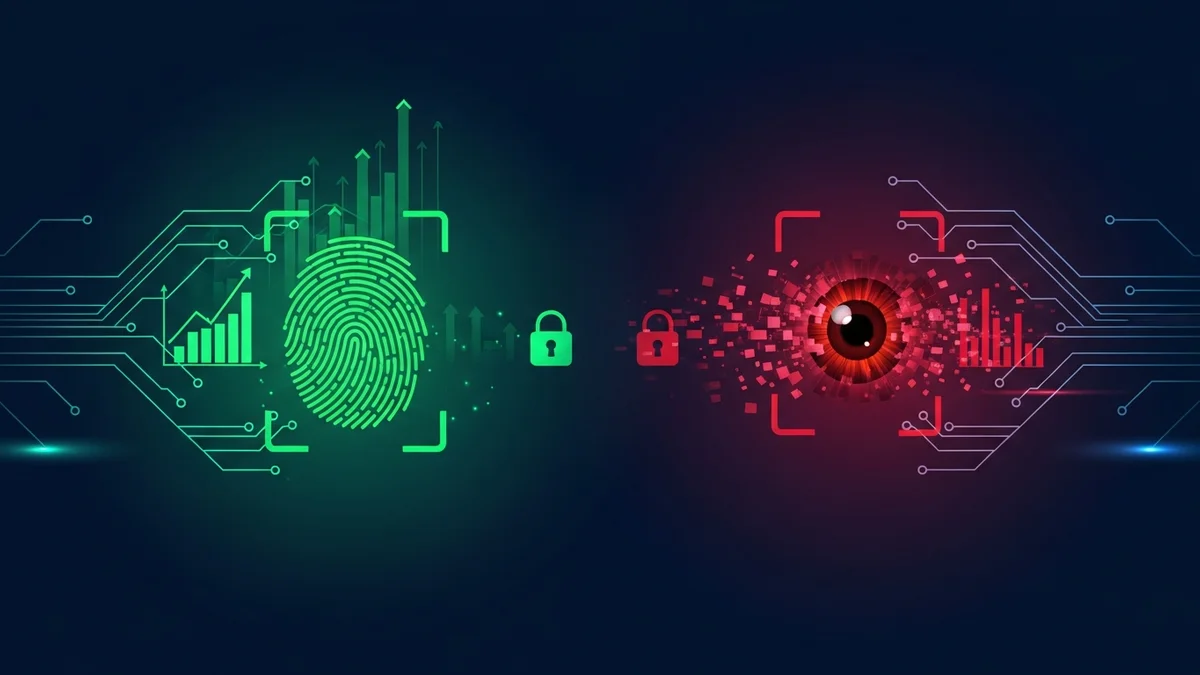
Biometric authentication has quickly moved from science fiction to everyday reality. We unlock smartphones with our faces, log into laptops with fingerprints, and pass through airport security using iris scans. The appeal is obvious: your fingerprint can’t be forgotten like a password, and your face can’t be guessed in a brute-force attack.
But while biometric authentication offers convenience and strong security advantages, it also introduces new risks — especially when biometric data is stolen or misused. Unlike passwords, you can’t change your fingerprint after a breach.
Let’s explore the real pros and cons of biometric authentication, backed by facts, statistics, and real-world incidents.
What Is Biometric Authentication?
Biometric authentication verifies identity using unique biological or behavioral characteristics. The most common types include:
- Fingerprint recognition
- Facial recognition
- Iris or retina scans
- Voice recognition
- Behavioral biometrics (typing rhythm, gait, mouse movement)
Instead of entering something you know (a password) or something you have (a security token), biometrics rely on something you are. This makes them attractive for both consumer devices and enterprise security systems.
According to industry research from MarketsandMarkets, the global biometric authentication market is expected to exceed $60 billion by 2027, reflecting rapid adoption across finance, healthcare, travel, and government sectors.
The Pros of Biometric Authentication
1. Stronger Protection Against Credential Theft
Traditional passwords are vulnerable to phishing, brute-force attacks, credential stuffing, and database leaks. Billions of credentials are exposed every year in data breaches. Verizon’s Data Breach Investigations Report consistently finds that stolen or weak credentials are involved in the majority of breaches.
Biometric authentication reduces reliance on passwords, making phishing attacks significantly less effective. An attacker cannot easily "guess" or "reuse" your fingerprint the way they can a password leaked in a breach.
2. Convenience and Speed
Users overwhelmingly prefer biometrics because they are fast and frictionless. A fingerprint scan takes less than a second. Facial recognition works even when your hands are full. This convenience increases security adoption because users are more likely to enable protection when it’s simple.
3. Reduced Password Fatigue
The average person manages dozens — sometimes hundreds — of online accounts. Password fatigue leads to risky behaviors like password reuse. Biometrics help reduce dependence on memorized credentials, especially when combined with secure device-based authentication.
4. Enhanced Multi-Factor Authentication (MFA)
Biometrics are most powerful when used as part of multi-factor authentication. For example, logging in with a password and confirming with a fingerprint adds a strong layer of protection. Even if a password is exposed in a breach, biometric verification can prevent unauthorized access.
The Cons of Biometric Authentication
Despite its advantages, biometric authentication is far from perfect.
1. Biometric Data Is Permanent
If your password is leaked, you can change it. If your fingerprint template is stolen, you cannot change your fingerprint.
This risk became clear in 2015 when the U.S. Office of Personnel Management (OPM) breach exposed the fingerprints of approximately 5.6 million federal employees. While passwords can be reset, compromised biometric data creates long-term identity risks.
2. Centralized Storage Risks
Biometric systems often store templates in centralized databases. If those systems are breached, attackers may gain access to sensitive identity markers. Unlike hashed passwords, biometric templates can sometimes be reverse-engineered or exploited depending on implementation weaknesses.
Even major companies have faced biometric data exposure incidents due to misconfigured databases and poor security practices.
3. False Positives and False Negatives
No biometric system is 100% accurate. False positives (granting access to the wrong person) and false negatives (denying legitimate users) occur. Environmental conditions, injuries, aging, lighting, or even identical twins can impact reliability.
High-security environments must carefully calibrate systems to balance convenience and risk tolerance.
4. Privacy Concerns and Surveillance
Facial recognition, in particular, raises significant privacy concerns. Governments and private companies can potentially track individuals without consent. Several cities have restricted or banned certain uses of facial recognition due to civil liberties concerns.
Biometric data can reveal more than identity — it may expose medical conditions, ethnicity markers, or behavioral patterns, making misuse especially sensitive.
5. Spoofing and Bypass Attacks
While biometrics are harder to steal than passwords, they are not impossible to bypass. Researchers have demonstrated fingerprint spoofing using 3D-printed molds and high-resolution photos. Early facial recognition systems were fooled by printed images or masks, though modern systems use liveness detection to reduce this risk.
Biometrics vs. Passwords: Which Is Safer?
The answer depends on implementation.
Biometrics stored locally on a device (such as Apple’s Secure Enclave or Android’s Trusted Execution Environment) are significantly safer than centralized biometric databases. In these systems, your fingerprint never leaves your device.
However, biometrics should not fully replace password hygiene. Most accounts still rely on email addresses as the ultimate recovery method. If your email account is compromised, attackers can reset passwords, bypass protections, and lock you out.
This is why monitoring for credential exposure remains critical. Tools like LeakDefend can monitor your email addresses for breaches and alert you if your credentials appear in newly discovered data leaks.
Best Practices for Using Biometric Authentication Safely
If you choose to use biometric authentication, follow these best practices:
- Enable multi-factor authentication whenever possible.
- Use device-based biometric storage instead of services that centralize biometric data.
- Maintain strong, unique passwords as a backup.
- Monitor your email accounts for breaches to prevent takeover attempts.
- Keep devices updated to patch biometric bypass vulnerabilities.
Even the most advanced authentication system can be undermined if your credentials are exposed elsewhere. LeakDefend.com lets you check all your email addresses for free and receive alerts if your information appears in breach databases.
🔒 Check If Your Email Was Breached — Monitor up to 3 email addresses for free with LeakDefend. Start Your Free Trial →
Final Verdict: Are Biometrics Worth It?
The pros and cons of biometric authentication show a clear pattern: biometrics offer strong convenience and meaningful protection against password-based attacks, but they introduce permanent, high-impact risks if compromised.
For most users, biometrics are safest when used as part of a layered security strategy — not as a standalone solution. Combine biometric login with strong password practices, multi-factor authentication, and proactive breach monitoring.
No authentication method is perfect. But when paired with vigilance and tools like LeakDefend that monitor exposed credentials across data breaches, biometric authentication can be a powerful component of modern identity protection.