Biometric authentication has quickly become a standard feature in modern security. From unlocking smartphones with a fingerprint to passing through airport security with facial recognition, biometrics promise convenience and stronger protection than traditional passwords. But are they truly safer?
The reality is more nuanced. While biometric authentication offers compelling advantages, it also introduces unique risks—especially in a world where data breaches are increasingly common. Understanding both sides is essential before relying solely on fingerprints, facial scans, or voice recognition to protect your digital life.
What Is Biometric Authentication?
Biometric authentication verifies identity using unique biological or behavioral traits. Common types include:
- Fingerprint recognition
- Facial recognition
- Iris or retina scans
- Voice recognition
- Behavioral biometrics (typing patterns, mouse movements)
Unlike passwords or PINs, biometrics are tied directly to who you are. According to industry reports, over 80% of smartphones worldwide now use fingerprint or facial recognition as a primary unlock method. Businesses are also rapidly adopting biometrics for workforce access and customer authentication.
On the surface, it sounds ideal: you can’t forget your fingerprint, and it’s harder to guess than a password. But security isn’t just about convenience—it’s about resilience against compromise.
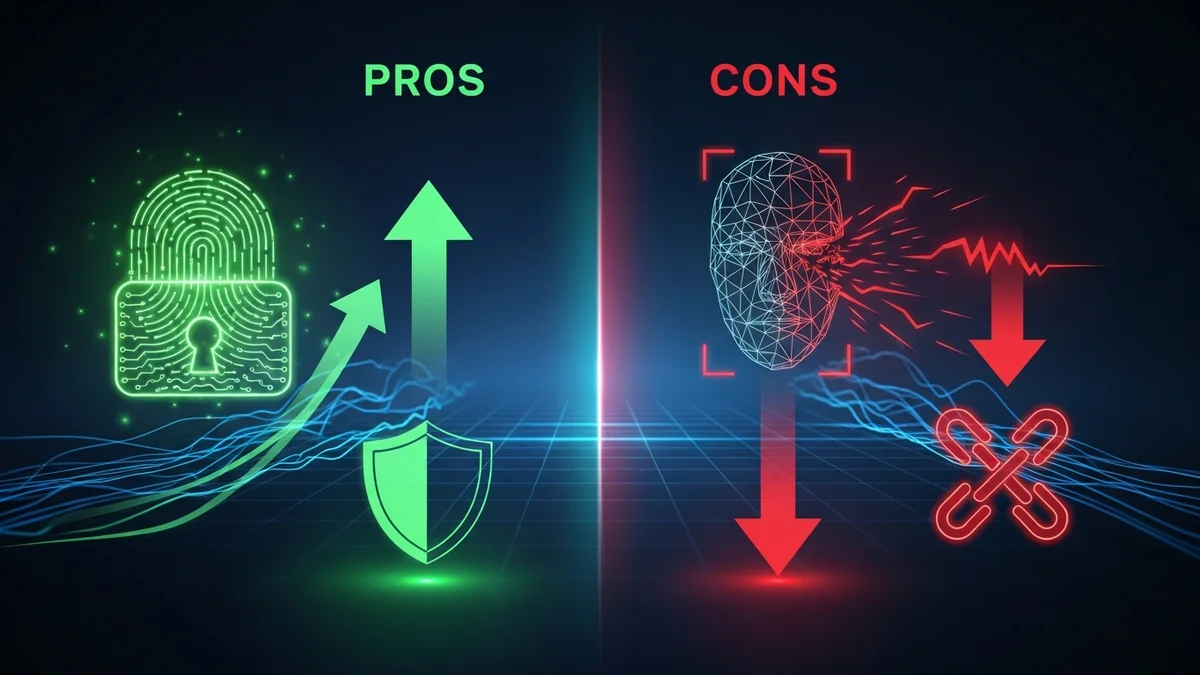
The Pros of Biometric Authentication
1. Convenience and Speed
Biometrics eliminate the need to remember complex passwords. Unlocking a device or approving a payment takes seconds. This ease of use reduces "password fatigue," a major factor behind weak or reused passwords.
2. Harder to Guess or Brute-Force
A four-digit PIN has 10,000 combinations. A password can be cracked if it’s weak or reused. A fingerprint or iris pattern, however, is significantly more complex. While not impossible to replicate, it’s far more difficult to brute-force compared to traditional credentials.
3. Reduced Credential Sharing
Passwords can be shared or stolen via phishing attacks. Biometrics are inherently personal. You can’t "email" someone your fingerprint (at least not easily), reducing certain attack vectors.
4. Stronger Multi-Factor Authentication (MFA)
Biometrics shine when combined with other factors. Using something you are (biometric) along with something you know (PIN) or something you have (security key) creates a layered defense that’s far more secure than a password alone.
In enterprise settings, biometric MFA has significantly reduced account takeover incidents when implemented correctly.
The Cons of Biometric Authentication
Despite the advantages, biometric authentication carries serious drawbacks.
1. Biometrics Can Be Stolen—And You Can’t Change Them
If your password leaks, you can reset it. If your fingerprint template is compromised, you can’t replace your fingerprint.
In 2019, the BioStar 2 security platform breach exposed over 1 million fingerprints and facial recognition records in an unsecured database. Unlike passwords, these biometric identifiers were permanent. Once exposed, the risk remains indefinitely.
2. False Positives and False Negatives
No biometric system is perfect. The FBI has acknowledged that facial recognition systems can have higher error rates for women and people of color. Even advanced systems may produce false matches or fail to recognize legitimate users under poor lighting or physical changes.
3. Privacy Concerns
Biometric data is extremely sensitive. Centralized storage of fingerprints or facial templates creates attractive targets for attackers. In 2015, the U.S. Office of Personnel Management (OPM) breach exposed the fingerprints of 5.6 million federal employees.
When biometric databases are compromised, the consequences extend beyond a single account—they can impact identity verification across multiple services.
4. Spoofing and Presentation Attacks
Biometrics are harder—but not impossible—to fake. Researchers have demonstrated methods to replicate fingerprints using high-resolution images. Early facial recognition systems were fooled by printed photos, though modern systems now use liveness detection to counter this.
Biometrics vs. Passwords: Which Is More Secure?
The debate isn’t about replacing passwords entirely—it’s about using the right combination of security measures.
Passwords alone are vulnerable. According to Verizon’s Data Breach Investigations Report, stolen or weak credentials remain one of the leading causes of data breaches year after year.
However, biometrics alone also present risks, especially when biometric data is centrally stored rather than securely encrypted on-device (as Apple’s Secure Enclave or Android’s Trusted Execution Environment aim to do).
The strongest approach is layered security:
- Biometrics for convenience
- Strong, unique passwords stored in a password manager
- Multi-factor authentication
- Ongoing breach monitoring
Even the best authentication method won’t help if your email address is exposed in a breach and attackers use social engineering to bypass protections. That’s why tools like LeakDefend are critical—they monitor your email addresses against known breach databases and alert you before compromised credentials can be exploited.
When Should You Use Biometric Authentication?
Biometrics make sense in many everyday scenarios:
- Unlocking smartphones and laptops
- Approving banking transactions (with MFA)
- Accessing workplace systems
- Verifying identity in secure facilities
However, best practice is to avoid relying solely on biometrics for high-value accounts. Financial services, primary email accounts, and cloud storage platforms should always include multi-factor authentication.
Additionally, you should regularly check whether your credentials have appeared in breach databases. LeakDefend.com lets you check all your email addresses for free and monitor up to three accounts, helping you identify risks before attackers exploit them.
Biometrics improve convenience—but they don’t eliminate breach exposure.
The Future of Biometric Security
Biometric authentication continues to evolve. Behavioral biometrics and AI-driven liveness detection are making systems more resistant to spoofing. Decentralized identity models may reduce the risks associated with centralized biometric storage.
At the same time, regulations such as Illinois’ Biometric Information Privacy Act (BIPA) highlight growing legal scrutiny around how companies collect and store biometric data.
The future likely isn’t passwordless—it’s multi-layered. Biometrics will play a central role, but only as part of a broader identity protection strategy.
Conclusion: Convenience with Caution
The pros and cons of biometric authentication reveal a clear truth: biometrics offer powerful convenience and can enhance security, but they are not a silver bullet.
They are harder to guess but impossible to reset. They reduce password fatigue but introduce privacy and permanence risks. Used alone, they’re insufficient. Used as part of a layered security approach, they can significantly strengthen your defenses.
Ultimately, security is about reducing risk across multiple fronts. Strong passwords, multi-factor authentication, encrypted devices, and proactive breach monitoring all work together. Services like LeakDefend provide early warning if your email credentials appear in data leaks—giving you time to act before attackers do.
🔒 Check If Your Email Was Breached — Monitor up to 3 email addresses for free with LeakDefend. Start Your Free Trial →
Biometric authentication is here to stay. The key is using it wisely—balancing innovation with vigilance to protect what matters most: your identity.