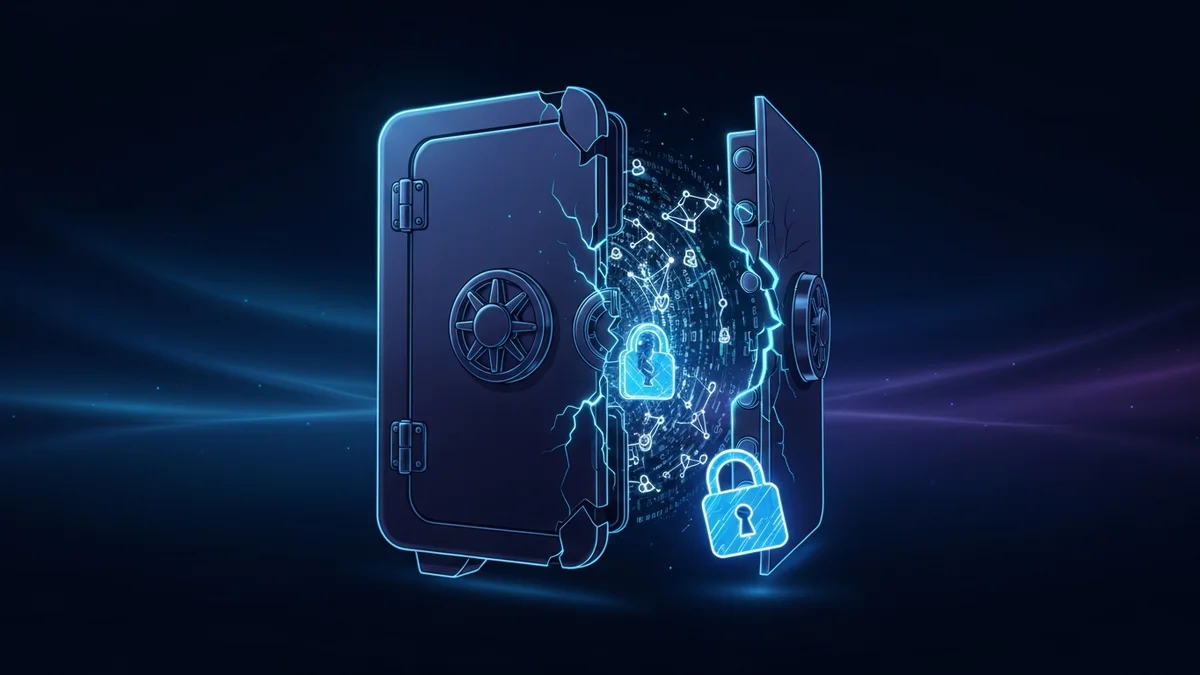
The LastPass breach sent shockwaves through the cybersecurity world — not because breaches are rare, but because this time, the victim was a password manager trusted by millions. When a company designed to safeguard your most sensitive credentials falls victim to attackers, it forces uncomfortable but necessary questions.
What actually happened? How serious was it? And most importantly, what should password manager users learn from it?
Here’s a clear breakdown of the incident and the critical lessons every user should take seriously.
What Happened in the LastPass Breach?
In August 2022, LastPass disclosed that attackers gained access to its development environment through a compromised developer account. By November 2022, the situation escalated: hackers had accessed a cloud storage environment containing customer vault backups.
While LastPass emphasized that vaults were encrypted, the attackers stole:
- Customer names, billing addresses, email addresses, and phone numbers
- IP addresses used to access the service
- Encrypted password vault backups
The vaults were protected with AES‑256 encryption, but security researchers quickly pointed out a critical caveat: the strength of each vault depended heavily on the user’s master password and password iteration settings.
In other words, even though the vaults were encrypted, weak master passwords could potentially be brute‑forced offline. Once attackers possess encrypted vault copies, they can attempt decryption without triggering alarms.
This shifted the breach from a corporate security issue to a personal security risk for millions of users.
Lesson 1: Your Master Password Is Everything
Password managers are only as strong as the master password protecting them. In the LastPass case, vault encryption relied on user-created master passwords combined with PBKDF2 hashing iterations.
Security experts noted that older accounts had significantly lower iteration counts — sometimes as low as 5,000 — compared to modern recommendations of 100,000+ or more. Lower iterations mean faster brute-force attempts.
If a user had a weak or reused master password, attackers with the encrypted vault could potentially crack it.
Takeaway:
- Use a long, unique master password (at least 16–20 characters).
- Avoid dictionary phrases or reused passwords.
- Regularly verify your password manager’s encryption settings.
Think of your master password as the key to a bank vault. If it’s weak, the strongest encryption in the world won’t save you.
Lesson 2: Encryption Doesn’t Mean Invulnerability
Many users assumed “encrypted” meant “untouchable.” The LastPass breach demonstrated that encryption protects data — but only under certain conditions.
When attackers steal encrypted data, they can attempt to decrypt it offline indefinitely. Unlike online attacks, there are no rate limits or lockouts.
This isn’t unique to LastPass. The 2015 Ashley Madison breach and other incidents showed how stolen encrypted datasets can later be cracked when weak credentials are involved.
Takeaway:
- Strong encryption must be paired with strong user behavior.
- Zero-knowledge architecture reduces risk, but it doesn’t eliminate user responsibility.
- Security is shared between provider and customer.
Trusting a security tool doesn’t remove the need for vigilance.
Lesson 3: Metadata Exposure Is a Real Risk
Even if vault contents remain secure, exposed metadata can still create danger.
In the LastPass breach, unencrypted data such as email addresses, names, and billing details were accessed. That information fuels highly targeted phishing campaigns.
According to the FBI’s Internet Crime Complaint Center (IC3), phishing remains one of the most reported cybercrimes, with hundreds of thousands of complaints annually. When attackers know you use a specific password manager, they can craft convincing fake alerts or reset emails.
Takeaway:
- Be skeptical of emails claiming to be urgent security alerts.
- Navigate directly to official websites instead of clicking links.
- Monitor your email addresses for breach exposure.
Tools like LeakDefend can monitor your email addresses and alert you if they appear in new or past data breaches — giving you time to react before attackers exploit the information.
Lesson 4: Multi-Factor Authentication Is Non-Negotiable
If there’s one clear defensive layer that consistently reduces risk, it’s multi-factor authentication (MFA).
Even if an attacker cracks a master password, MFA can stop account access. Security studies repeatedly show that MFA blocks the vast majority of automated credential attacks.
Password manager users should:
- Enable app-based MFA (not just SMS).
- Consider hardware security keys for maximum protection.
- Enable MFA on the email account linked to the password manager.
Your email account is the gateway to password resets. If it’s compromised, everything else can fall like dominoes.
Lesson 5: Assume Breaches Will Happen
The harsh reality: breaches are no longer rare events. From Equifax (147 million people affected) to LinkedIn (700 million records scraped and leaked), massive data exposures have become routine.
The LastPass breach reinforces a modern security principle: design your digital life assuming that at some point, some service you use will be compromised.
That means:
- Using unique passwords for every account.
- Regularly auditing sensitive accounts.
- Rotating critical passwords after major security incidents.
- Monitoring your digital footprint for exposure.
Services like LeakDefend.com let you check all your email addresses for free and monitor ongoing exposure, helping you respond quickly if your data surfaces in breach databases.
Conclusion: Trust Tools, But Strengthen Your Habits
The LastPass breach was not proof that password managers are useless. In fact, security experts still widely recommend them over password reuse. However, the incident highlighted a crucial truth: no tool replaces strong personal security practices.
A password manager remains one of the safest ways to manage credentials — but only if you:
- Use a truly strong master password
- Enable multi-factor authentication
- Stay alert to phishing attempts
- Monitor your email addresses for breach exposure
Cybersecurity is layered. When one defense fails, another should stand in its place. By combining strong password hygiene, MFA, and breach monitoring tools like LeakDefend, you dramatically reduce the chance that a single incident becomes a full-scale identity disaster.
🔒 Check If Your Email Was Breached — Monitor up to 3 email addresses for free with LeakDefend. Start Your Free Trial →
The LastPass breach was a wake-up call. The smartest response isn’t panic — it’s preparation.