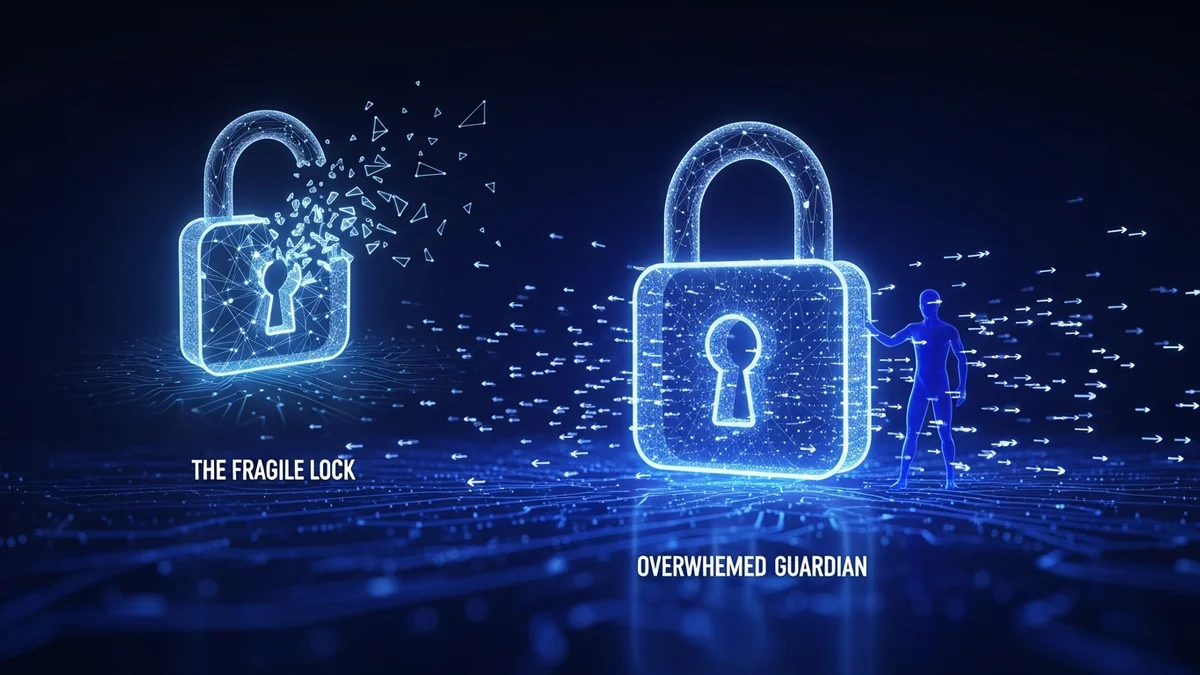
Every year, cybersecurity reports reveal a frustrating truth: “123456” is still the most common password in the world. Despite endless warnings, high-profile data breaches, and improved awareness about cybercrime, millions of people continue to rely on this dangerously weak combination.
According to multiple annual analyses from companies like NordPass and SplashData, “123456” has topped the list of most-used passwords for years. In some reports, it appears millions of times in leaked databases. Even variations like “123456789” and “12345678” rank close behind.
So why does this keep happening? And more importantly, what does it mean for your online security?
1. The Psychology Behind Weak Passwords
At its core, the persistence of “123456” is about convenience. People prioritize speed and memorability over security. When prompted to create a password, many users:
- Choose something easy to type
- Reuse an existing password
- Assume they won’t be targeted
- Believe the account “isn’t important enough” to protect
Numeric sequences like “123456” are simple, fast, and universally remembered. There’s no cognitive effort involved. Unfortunately, that same simplicity makes them the first guesses in automated attacks.
Another psychological factor is optimism bias — the belief that bad things happen to other people. Users may understand that weak passwords are risky in theory, but they underestimate their personal exposure.
2. The Role of Massive Data Breaches
Data breaches have exposed billions of login credentials over the past decade. Incidents affecting companies like LinkedIn (over 160 million accounts), Yahoo (3 billion accounts), and Adobe (153 million accounts) revealed an uncomfortable reality: weak passwords are everywhere.
When researchers analyze leaked datasets, they consistently find “123456” at or near the top. In some breach collections, it appears millions of times.
This matters because cybercriminals use these leaked passwords to power credential stuffing attacks. In these attacks, automated bots attempt stolen username-password combinations across thousands of websites. If someone used “123456” on one breached site, attackers will test it everywhere else.
This is why monitoring your exposure matters. Tools like LeakDefend can monitor your email addresses for breaches and alert you if your credentials appear in leaked databases. Knowing you’ve been exposed is the first step to reducing risk.
3. How Hackers Exploit Common Passwords
Modern hacking is rarely manual. Attackers rely on automation and predictable human behavior. The most common attack methods include:
- Brute-force attacks: Rapidly guessing passwords using common combinations
- Dictionary attacks: Testing lists of frequently used passwords like “123456”
- Credential stuffing: Reusing breached passwords across services
Because “123456” is so widely known as the most common password, it is always at the top of cracking lists. In fact, security researchers have demonstrated that accounts protected by “123456” can often be compromised in less than a second.
The bigger issue is password reuse. If someone uses “123456” for a streaming account and also for email, banking, or cloud storage, a breach in one place can cascade into full identity compromise.
4. What This Says About Online Security Awareness
The continued dominance of “123456” reveals a gap between awareness and action. Most people know they should create strong passwords. Yet behavior hasn’t caught up with knowledge.
Several factors contribute to this:
- Password fatigue from managing dozens of accounts
- Frequent password reset requirements
- Lack of password manager adoption
- Underestimating the value of personal data
Ironically, even as multi-factor authentication (MFA) becomes more common, weak passwords still pose a risk. Not all services enforce MFA, and phishing attacks can bypass it in some cases.
The lesson is clear: weak passwords remain one of the simplest entry points for attackers — and one of the easiest problems to fix.
5. How to Protect Yourself (Beyond Avoiding “123456”)
Protecting your accounts doesn’t require technical expertise. It requires better habits and the right tools.
Here’s what security professionals recommend:
- Use a password manager: These generate and store long, random passwords for every account.
- Create unique passwords: Never reuse passwords across services.
- Enable multi-factor authentication (MFA): Add an extra layer of protection wherever possible.
- Monitor for breaches: Regularly check whether your email addresses appear in leaked datasets.
LeakDefend.com lets you check all your email addresses for free and receive alerts if your data surfaces in a breach. Early detection allows you to change passwords before attackers can exploit them.
If you discover that you’ve used a weak password in the past, change it immediately — especially on email accounts. Email is the gateway to password resets for nearly every other service.
6. The Real Meaning of “123456” Being #1
The fact that “123456” remains the most common password isn’t just a joke — it’s a warning sign. It highlights how human behavior remains the weakest link in cybersecurity.
Cybercriminals don’t need advanced zero-day exploits when millions of accounts are protected by the digital equivalent of leaving the front door unlocked.
But there’s also good news: password security is one of the few areas where individuals have almost complete control. Unlike large-scale breaches or sophisticated malware campaigns, choosing a strong password is entirely within your power.
And pairing strong passwords with breach monitoring dramatically reduces your risk. Services like LeakDefend help close the loop by alerting you when your credentials are exposed, giving you time to act before real damage occurs.
🔒 Check If Your Email Was Breached — Monitor up to 3 email addresses for free with LeakDefend. Start Your Free Trial →
Conclusion
“123456” is still the most common password because convenience often wins over caution. But in today’s threat landscape, that tradeoff is increasingly dangerous.
Billions of leaked credentials, automated hacking tools, and widespread password reuse mean that even one weak password can expose your digital life. The solution isn’t complicated: use unique, complex passwords, enable MFA, and monitor your accounts for breaches.
The continued popularity of “123456” proves that cybersecurity starts with individual responsibility. The good news? Changing your habits today can prevent becoming tomorrow’s breach statistic.