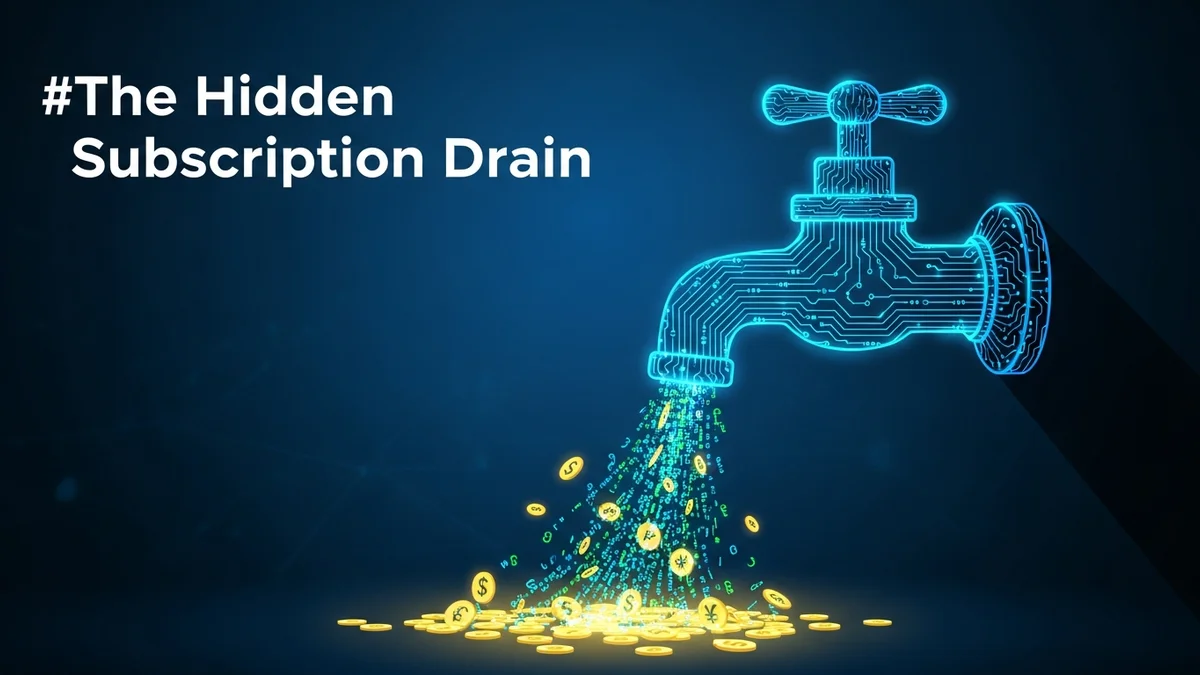
Streaming services. Cloud storage. Fitness apps. Premium newsletters. Free trials you forgot to cancel. Hidden subscriptions are quietly draining bank accounts every single month — and most people don’t even realize it.
According to a 2022 C+R Research report, consumers underestimate their subscription spending by more than $100 per month. While participants guessed they spent around $86 monthly, the real average was $219. That’s over $1,500 per year in unexpected costs.
The problem isn’t just overspending. It’s visibility. Many subscriptions hide behind old email addresses, forgotten passwords, and long-unused apps. Here’s how these hidden charges accumulate — and how to take back control.
Why Hidden Subscriptions Are So Easy to Miss
Modern subscription models are designed for convenience — and retention. One-click signups, auto-renewals, and “set it and forget it” billing make it effortless to subscribe. Cancelling, however, often takes more effort.
Several factors make subscriptions hard to track:
- Free trials that convert automatically after 7, 14, or 30 days
- Multiple email addresses used for different services
- Small monthly charges that don’t raise alarms
- Bundled services inside app stores or digital wallets
- Password reuse that locks you out of old accounts
If you’ve ever thought, “I’ll cancel later,” you’re not alone. Businesses rely on what’s called subscription inertia — the tendency for customers to keep paying simply because cancelling feels inconvenient.
Over time, $4.99 here and $12.99 there add up fast.
The Real Financial Impact of Forgotten Subscriptions
Let’s break it down. Imagine you’re unknowingly paying for:
- Two streaming services you no longer watch ($30/month)
- An unused fitness app ($15/month)
- Cloud storage upgrades across two platforms ($20/month)
- A premium software tool from a past project ($25/month)
That’s $90 per month — or $1,080 per year — for services you don’t use.
Multiply that over five years and you’re looking at more than $5,000 lost.
But financial waste isn’t the only concern. Forgotten accounts can become security liabilities, especially if they’re tied to outdated passwords or exposed in data breaches.
Hidden Subscriptions and Data Breach Risks
Every subscription requires an account. Every account stores personal data. And every stored dataset is a potential breach target.
Consider the scale of past breaches:
- Yahoo (2013–2014): 3 billion accounts exposed
- Adobe (2013): 153 million user records leaked
- Canva (2019): 139 million accounts affected
If you created accounts on platforms years ago and forgot about them, your data may still be sitting in company databases. Old, unused accounts are particularly vulnerable because:
- They often use weak or reused passwords
- Users rarely monitor them for suspicious activity
- Recovery email addresses may no longer be secure
This is where visibility becomes critical. Tools like LeakDefend can monitor your email addresses for breach exposure, helping you identify forgotten accounts tied to past subscriptions. Sometimes the first sign of a hidden subscription is a breach alert tied to an email you barely remember using.
How to Find All Your Active Subscriptions
Regaining control starts with a structured audit. Here’s how to do it effectively:
1. Review bank and credit card statements
Scan the last 6–12 months for recurring charges. Look for identical amounts billed monthly or annually.
2. Check app store subscriptions
Both Apple and Google Play hide active subscriptions inside account settings. Many users forget these entirely.
3. Search your email inbox
Use terms like “subscription,” “renewal,” “receipt,” or “trial ending.” Repeat this process across every email address you’ve ever used.
4. Audit digital wallets
PayPal, Stripe, and other payment platforms may contain pre-approved recurring payments.
5. Monitor for breach-linked accounts
If an email appears in a data breach, it’s a strong signal that you created an account there at some point. LeakDefend.com lets you check all your email addresses for free, helping you reconnect the dots between old logins and active services.
This process can uncover subscriptions you forgot years ago.
How to Prevent Subscription Creep in the Future
Once you’ve cleaned up your existing subscriptions, the next step is prevention.
- Use a dedicated email for subscriptions to keep them centralized
- Set calendar reminders for trial end dates
- Avoid storing card details on rarely used platforms
- Use a password manager to track all account logins
- Regularly monitor for breaches tied to your email addresses
Proactive monitoring reduces both financial waste and security exposure. Forgotten subscriptions aren’t just budgeting issues — they’re unmanaged digital assets.
LeakDefend helps by alerting you if your email appears in newly discovered breaches, giving you early warning before attackers exploit dormant accounts.
🔒 Check If Your Email Was Breached — Monitor up to 3 email addresses for free with LeakDefend. Start Your Free Trial →
When to Cancel — And When to Consolidate
Not every subscription needs to be eliminated. Some provide real value. The key is intentional spending.
Ask yourself:
- Did I use this in the last 30 days?
- Would I subscribe again today at full price?
- Does another service I already pay for offer the same feature?
If the answer is no, cancel it. If multiple services overlap, consolidate them. Many streaming, storage, and productivity tools duplicate functionality.
The goal isn’t extreme minimalism — it’s awareness.
Conclusion: Small Charges, Big Consequences
Hidden subscriptions thrive on invisibility. Individually, they seem insignificant. Collectively, they can cost hundreds — even thousands — each year.
Beyond the financial impact, every forgotten account represents stored personal data, potential password reuse, and possible breach exposure. The longer accounts sit unmanaged, the higher the risk.
Take one hour this week to audit your subscriptions, review your statements, and check your email addresses for breach exposure. The savings — and the security peace of mind — are worth it.
Because in today’s subscription-driven world, what you don’t see really can cost you.