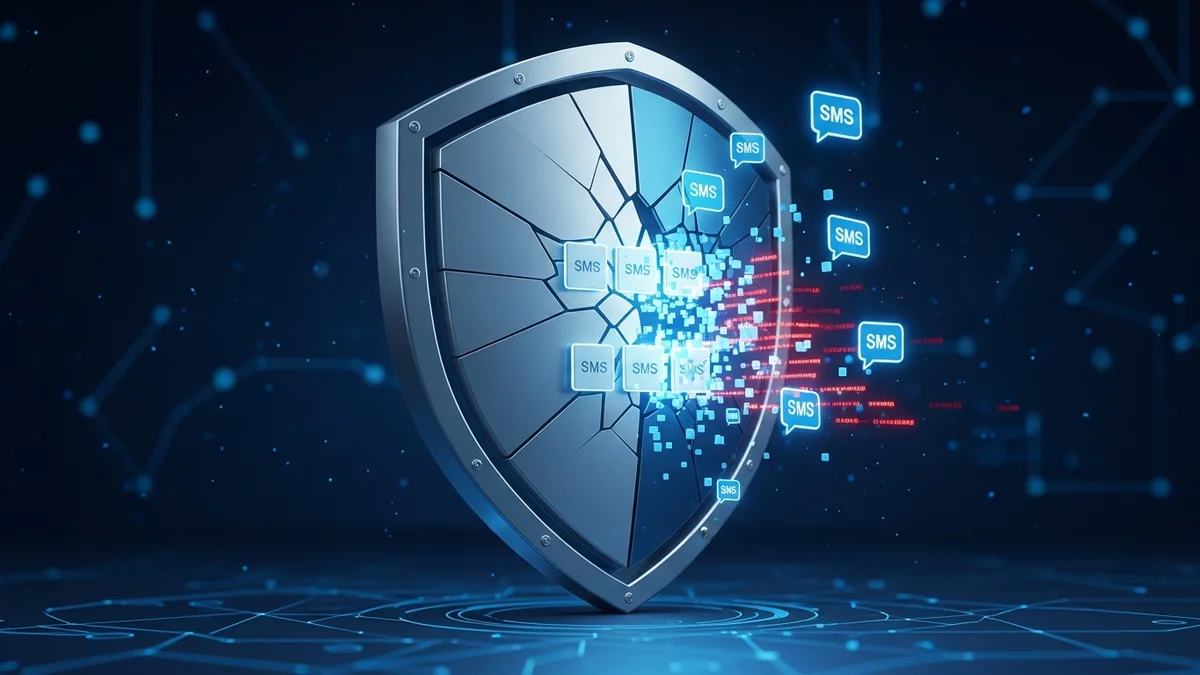
For years, SMS-based two-factor authentication (2FA) was considered a major step forward in online security. After all, adding a one-time code sent to your phone is better than relying on a password alone. But in 2026, it’s clear that SMS two-factor authentication is no longer enough to properly protect sensitive accounts.
Cybercriminals have adapted. SIM swapping, phishing kits that bypass SMS codes, and weaknesses in telecom infrastructure have made SMS-based 2FA far less reliable than many people think. If you’re still depending on text-message codes to protect your email, banking, or crypto accounts, it’s time to understand the risks—and what to use instead.
SMS 2FA Was an Improvement—But the Threat Landscape Changed
When SMS 2FA became popular in the early 2010s, most account breaches happened because of weak or reused passwords. Adding a second factor dramatically reduced automated attacks. Even today, Microsoft reports that enabling multi-factor authentication can block over 99% of automated account compromise attempts.
However, not all forms of multi-factor authentication offer equal protection. SMS relies on the security of the mobile phone network—an infrastructure never designed to defend against modern cybercrime. Attackers don’t need to guess your password if they can intercept your text messages.
Unfortunately, that’s exactly what many criminals now specialize in.
SIM Swapping: The Biggest Weakness of SMS 2FA
SIM swapping has become one of the most dangerous attacks against individuals. In a SIM swap attack, a criminal convinces your mobile carrier to transfer your phone number to a SIM card they control. Once that happens, they receive your calls and SMS verification codes.
High-profile victims have included cryptocurrency investors, tech executives, and social media influencers. In 2019, Twitter CEO Jack Dorsey’s account was compromised via SIM swapping. The FBI has also warned that SIM swap losses in the United States alone reached tens of millions of dollars annually, with reported cases steadily increasing.
Once attackers control your phone number, they can:
- Reset your email passwords
- Bypass SMS-based 2FA
- Access financial and crypto accounts
- Lock you out of your own accounts
And because many services use SMS for account recovery, the damage can cascade quickly.
Phishing Kits Now Bypass SMS Codes in Real Time
Modern phishing attacks have evolved far beyond fake login pages. Today’s phishing kits act as real-time proxies between you and legitimate websites.
Here’s how it works:
- You receive a convincing phishing email.
- You enter your username and password on a fake site.
- The attacker instantly relays those credentials to the real site.
- When the site sends you an SMS code, the phishing page asks for it.
- You enter the code—and the attacker uses it immediately.
This technique, known as an "adversary-in-the-middle" attack, completely defeats SMS-based 2FA. Even security-conscious users fall for it because everything appears legitimate.
Major platforms including Microsoft and Google have documented large-scale phishing campaigns that successfully bypass SMS verification. The problem isn’t that users are careless—the problem is that SMS codes can be stolen in real time.
Telecom Infrastructure Was Never Built for Security
SMS relies on the Signaling System No. 7 (SS7) protocol, developed in the 1970s. Security researchers have repeatedly demonstrated that attackers with access to telecom networks can intercept text messages by exploiting SS7 vulnerabilities.
While such attacks require more sophistication than phishing, they highlight a fundamental issue: SMS was not designed as a secure authentication channel.
In addition, text messages are not encrypted end-to-end. They can be:
- Intercepted by malware on your device
- Redirected via SIM swap fraud
- Accessed through weak carrier verification processes
Relying on SMS as your primary security barrier is like installing a reinforced front door but leaving the windows unlocked.
Data Breaches Make SMS 2FA Even Riskier
Large-scale data breaches fuel targeted attacks. When your email, phone number, and passwords appear in breach databases, attackers gain the information needed to launch convincing phishing campaigns or social engineering calls to your mobile carrier.
Major breaches—from LinkedIn (700+ million records exposed) to Facebook (533 million users’ phone numbers leaked)—have provided criminals with vast databases linking names, emails, and phone numbers.
If your phone number is publicly associated with your accounts, it becomes a direct attack vector.
This is why monitoring your exposure is critical. Tools like LeakDefend can monitor your email addresses for breaches and alert you when your data appears in newly leaked databases. The earlier you know your data is exposed, the faster you can secure vulnerable accounts before attackers exploit them.
Stronger Alternatives to SMS-Based Authentication
Fortunately, there are far more secure options available today.
- Authenticator apps: Apps like Google Authenticator, Microsoft Authenticator, or Authy generate time-based one-time codes stored locally on your device. These codes cannot be intercepted through SIM swapping.
- Hardware security keys: Physical devices like YubiKey use cryptographic authentication that is resistant to phishing and replay attacks.
- Passkeys: Increasingly supported by Apple, Google, and Microsoft, passkeys use public-key cryptography and biometric authentication, eliminating passwords and SMS codes entirely.
- App-based push authentication: Secure push notifications inside dedicated apps are harder to intercept than SMS messages.
If SMS is the only option available, use it—but treat it as a minimum baseline, not a gold standard.
Also remember: authentication is only one layer of defense. Regularly checking whether your credentials have been exposed is just as important. LeakDefend.com lets you check all your email addresses for free and monitor up to three accounts for breach alerts, helping you act before attackers do.
🔒 Check If Your Email Was Breached — Monitor up to 3 email addresses for free with LeakDefend. Start Your Free Trial →
SMS 2FA Isn’t Useless—But It’s No Longer Sufficient
It’s important to be clear: SMS two-factor authentication is still better than no 2FA at all. It can stop basic credential-stuffing attacks and automated bots. But it is increasingly vulnerable to targeted attacks, social engineering, and infrastructure weaknesses.
Cybersecurity evolves quickly. What was considered strong protection ten years ago may now be only a partial defense. As attackers refine their tactics, individuals must upgrade their security habits as well.
If you’re serious about protecting your digital identity:
- Switch from SMS to authenticator apps or passkeys wherever possible.
- Use unique passwords stored in a password manager.
- Enable breach monitoring to detect exposed credentials early.
- Limit public exposure of your phone number.
In today’s threat environment, relying on SMS alone is a gamble. Strengthen your authentication methods, monitor your exposure, and treat security as a layered system—not a single checkbox. Your accounts, finances, and identity are worth more than a six-digit text message.