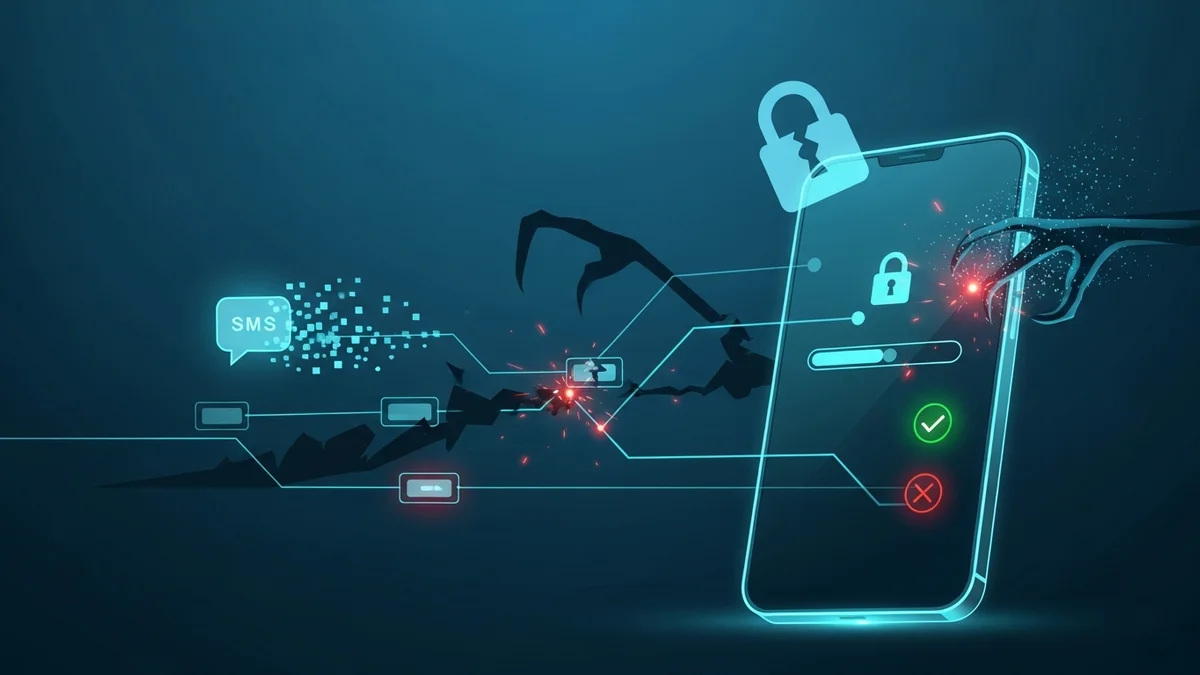
For years, SMS-based two-factor authentication (2FA) has been promoted as a simple way to secure online accounts. After entering a password, you receive a one-time code via text message. Enter the code, and you're in. It feels secure — and compared to using a password alone, it is.
But here’s the reality: SMS two-factor authentication is no longer strong enough to protect sensitive accounts. Cybercriminals have evolved, and the weaknesses in SMS-based security are now widely exploited. From SIM-swapping scams to phishing kits that bypass text codes in real time, attackers have found ways around what many still consider “extra security.”
Let’s break down why SMS 2FA isn’t enough anymore — and what you should use instead.
SMS Messages Can Be Intercepted
Text messages were never designed to be secure. SMS relies on decades-old telecom infrastructure that lacks modern encryption standards. While intercepting SMS messages isn’t trivial, it’s absolutely possible — especially for well-funded attackers.
One major weakness is the Signaling System No. 7 (SS7) protocol, which telecommunications providers use to route messages globally. Security researchers have repeatedly demonstrated that SS7 vulnerabilities can allow attackers to intercept SMS messages, including 2FA codes.
Even more concerning is the rise of SIM swapping.
- Attackers gather personal information about a victim.
- They contact the victim’s mobile carrier and impersonate them.
- The carrier transfers the victim’s phone number to a new SIM card controlled by the attacker.
- All SMS 2FA codes now go directly to the criminal.
The FBI reported 1,611 SIM-swapping complaints in 2022, with losses exceeding $68 million — a sharp increase from previous years. High-profile victims have included cryptocurrency investors, executives, and even Twitter co-founder Jack Dorsey in 2019.
If your phone number can be hijacked, SMS 2FA becomes useless.
Phishing Attacks Can Bypass SMS 2FA in Real Time
Many people believe two-factor authentication automatically stops phishing. Unfortunately, that’s not true.
Modern phishing kits are designed to act as real-time proxies. Here’s how it works:
- You receive a phishing email that looks legitimate.
- You enter your username and password on a fake site.
- The attacker immediately submits those credentials to the real website.
- The site sends a legitimate SMS code to your phone.
- You enter the code on the fake site.
- The attacker captures it and logs into your account instantly.
This technique, sometimes called “man-in-the-middle phishing,” completely defeats SMS-based 2FA. Criminal toolkits like Evilginx and Modlishka have automated this process, making it accessible even to low-skilled attackers.
In other words, if you can be tricked into typing your code into the wrong site, SMS won’t save you.
NIST and Security Experts Have Warned Against SMS for Years
The cybersecurity community has long recognized SMS weaknesses. In 2016, the U.S. National Institute of Standards and Technology (NIST) announced it would deprecate SMS-based authentication as a secure out-of-band verification method due to interception risks.
Although NIST later softened its stance, the warning was clear: SMS should not be considered a high-assurance authentication method.
Major tech companies have moved accordingly:
- Google heavily promotes app-based authentication and passkeys.
- Microsoft reports that app-based or hardware key 2FA blocks 99.9% of automated account attacks.
- Apple encourages device-based authentication and security keys for Apple ID protection.
If industry leaders are shifting away from SMS, that’s a strong signal that users should too.
Phone Numbers Are Easy to Discover
Unlike authentication apps or hardware keys, phone numbers are widely exposed.
Your number may appear in:
- Data breaches
- Social media profiles
- Public records
- Marketing databases
Once attackers have your phone number, they can target you with SIM-swapping attempts, SMS phishing ("smishing"), or social engineering attacks against your carrier.
This is where proactive monitoring becomes critical. Data breaches happen constantly — from social media platforms to retailers and financial services. Tools like LeakDefend can monitor your email addresses and alert you if your data appears in a breach. If your information is exposed, you can secure accounts before attackers exploit them.
Remember: SMS 2FA is only as secure as the phone number attached to it. If that number is exposed, your protection weakens.
Stronger Alternatives to SMS 2FA
If SMS isn’t enough, what should you use instead?
Here are significantly stronger options:
- Authenticator apps (Google Authenticator, Microsoft Authenticator, Authy): These generate time-based codes directly on your device, not through your carrier.
- Hardware security keys (YubiKey, Titan Key): Physical devices that must be inserted or tapped to authenticate. These are highly resistant to phishing.
- Passkeys: A newer, passwordless authentication method using cryptographic keys stored securely on your device.
Hardware keys and passkeys are currently the gold standard for consumer account security because they are phishing-resistant. Even if you’re tricked into visiting a fake website, the authentication simply won’t work.
If you must use SMS (because some services offer no alternative), treat it as a minimum baseline — not a complete solution. Combine it with:
- Strong, unique passwords for every account
- A reputable password manager
- Regular breach monitoring
LeakDefend.com lets you check up to three email addresses for free and alerts you when new breaches occur. That visibility is essential because compromised credentials are often the first step in bypassing weak authentication.
Why SMS 2FA Is Better Than Nothing — But Not Enough
To be clear, SMS two-factor authentication is still better than using a password alone. It stops many automated attacks and credential-stuffing bots.
But cybersecurity is about layers — and SMS is now one of the weaker layers.
Attackers have:
- Automated SIM-swapping tactics
- Advanced phishing kits that capture 2FA codes instantly
- Access to massive databases of leaked personal information
Meanwhile, stronger, phishing-resistant options are widely available and often free.
If your email account, banking login, or cryptocurrency exchange still relies solely on SMS 2FA, you’re trusting a system that criminals already know how to bypass.
🔒 Check If Your Email Was Breached — Monitor up to 3 email addresses for free with LeakDefend. Start Your Free Trial →
Conclusion
SMS two-factor authentication was a major step forward a decade ago. Today, it’s a minimum standard — not a robust defense.
Between SIM-swapping attacks, SS7 vulnerabilities, real-time phishing proxies, and widespread data leaks, SMS-based 2FA has clear and documented weaknesses. Security experts, government agencies, and major tech companies have all moved toward stronger alternatives.
If you want real protection in 2026 and beyond, upgrade to app-based authentication, hardware security keys, or passkeys wherever possible. Use strong, unique passwords. And monitor your digital exposure continuously with services like LeakDefend so you can act before criminals do.
Because in modern cybersecurity, "extra security" isn’t enough — it has to be the right kind of security.