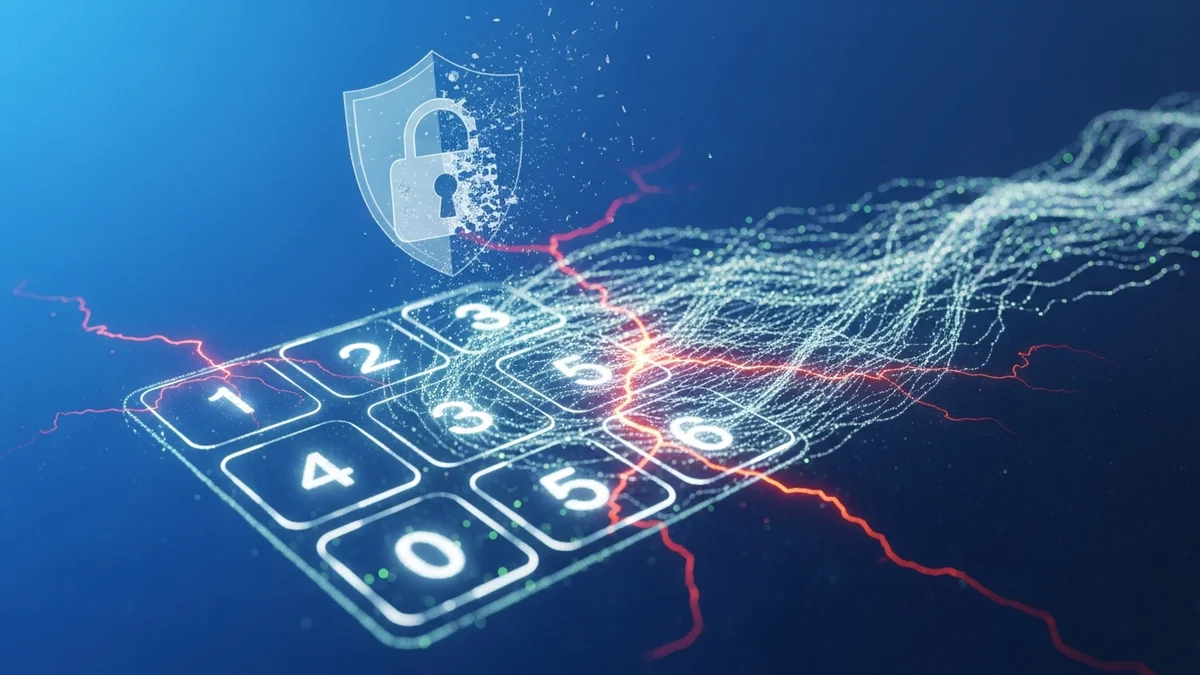
It’s 2026, and unbelievably, “123456” is still the most common password in the world. Despite constant security warnings, high-profile data breaches, and built-in password strength meters, millions of people continue to rely on combinations that can be cracked in less than a second.
Year after year, cybersecurity firms like NordPass and SplashData publish lists of the most common passwords. And year after year, "123456," "password," and "qwerty" dominate the rankings. This isn’t just a harmless bad habit — it has real consequences for personal privacy, financial security, and corporate data protection.
So why does this keep happening? And what does it mean for your online security?
The Data: Weak Passwords Are Everywhere
Multiple independent password studies confirm the same pattern. NordPass’s annual research, based on leaked credential databases containing millions to billions of passwords, consistently ranks “123456” as the most common password globally. In many reports, it accounts for millions of active accounts.
Security researchers estimate that:
- Over 80% of data breaches involve weak or reused passwords.
- Simple numeric passwords like “123456” can be cracked instantly using modern brute-force tools.
- Billions of credentials are circulating on dark web marketplaces following breaches at companies like LinkedIn, Adobe, Dropbox, and Yahoo.
When massive breaches occur, attackers don’t just target one account. They use automated “credential stuffing” attacks to test stolen usernames and passwords across banking sites, email providers, and social platforms. If someone used “123456” once, there’s a good chance they used it elsewhere.
Why Do People Still Use “123456”?
On the surface, it seems irrational. But human behavior tells a different story.
1. Convenience beats security. People prioritize speed and simplicity. Remembering dozens of complex passwords feels overwhelming, especially without a password manager.
2. Risk feels abstract. Many users believe, “It won’t happen to me.” Data breaches feel distant — until their own account is compromised.
3. Password fatigue is real. The average person manages 100+ online accounts. Without structured password management habits, shortcuts become inevitable.
4. Misplaced trust in platforms. Some assume large tech companies will protect them regardless of their password strength. While companies invest heavily in security, they cannot protect accounts with easily guessable credentials.
The result? Weak passwords persist not because people don’t care — but because secure behavior requires effort and systems that many users haven’t adopted.
The Real-World Consequences of Weak Passwords
Using “123456” isn’t just a minor security slip. It can trigger a chain reaction.
- Email takeovers: Once attackers access your email, they can reset passwords for other services.
- Identity theft: Personal data exposed in breaches can be combined with weak passwords to impersonate victims.
- Financial fraud: Banking and payment accounts are prime targets for credential stuffing.
- Corporate compromise: Weak employee passwords have led to ransomware infections and large-scale data leaks.
Consider major breaches like the 2012 LinkedIn incident (over 165 million accounts) or the Yahoo breaches affecting 3 billion accounts. Many compromised credentials were protected by weak or reused passwords, making them easy to exploit even years later.
Even today, newly leaked databases frequently show massive numbers of accounts secured with passwords that can be cracked instantly.
Why Password Reuse Makes It Even Worse
“123456” alone is dangerous. But reusing any password — even a moderately strong one — multiplies the risk.
Credential stuffing tools automatically test stolen login combinations across hundreds of popular websites. If your email and password were exposed in one breach, attackers can attempt logins on:
- Streaming platforms
- Online retailers
- Cloud storage services
- Cryptocurrency exchanges
- Banking apps
This is why breach monitoring matters. Tools like LeakDefend continuously monitor breach databases and alert you if your email address appears in newly leaked datasets. Early detection gives you time to change passwords before attackers exploit them.
LeakDefend.com lets you check all your email addresses for free and see whether your credentials have already been exposed — which is often the wake-up call people need.
Why Technology Alone Hasn’t Solved the Problem
You might wonder: haven’t we moved beyond passwords?
While multi-factor authentication (MFA), passkeys, and biometric logins are gaining adoption, passwords are still the backbone of most authentication systems. Many websites:
- Don’t require strong password standards
- Allow simple numeric-only passwords
- Fail to enforce multi-factor authentication by default
Even when MFA is available, adoption remains inconsistent. According to various industry estimates, a significant percentage of users still do not enable two-factor authentication unless forced to.
Until passwordless systems become universal, weak passwords will continue to be exploited.
How to Break the “123456” Habit
The solution isn’t just “pick a better password.” It’s about changing your system.
- Use a password manager: Generate and store unique, complex passwords for every account.
- Enable multi-factor authentication: Even if your password is compromised, MFA adds a critical barrier.
- Check for past breaches: If your email has already appeared in leaked databases, change affected passwords immediately.
- Stop reusing passwords: Every account should have a unique credential.
Services like LeakDefend help close the awareness gap by notifying you when your credentials are exposed in a breach. Monitoring your digital footprint is just as important as locking your front door.
🔒 Check If Your Email Was Breached — Monitor up to 3 email addresses for free with LeakDefend. Start Your Free Trial →
What “123456” Really Tells Us About Cybersecurity
The persistence of “123456” as the most common password isn’t just a joke — it’s a signal.
It shows that cybersecurity is still largely a human problem. No matter how advanced encryption becomes, accounts remain vulnerable if basic hygiene isn’t followed.
Attackers don’t need sophisticated zero-day exploits when millions of people are effectively leaving the digital equivalent of their doors unlocked.
The good news? This is one of the easiest risks to fix. Strong, unique passwords combined with breach monitoring and multi-factor authentication dramatically reduce your exposure.
“123456” may still top the charts — but it doesn’t have to be your weak link.