Passwords alone are no longer enough to protect your online accounts. Data breaches, phishing campaigns, and credential-stuffing attacks have made stolen passwords a daily reality. According to Verizon’s 2023 Data Breach Investigations Report, over 80% of hacking-related breaches involve stolen or brute-forced credentials. That’s where multi-factor authentication (MFA) comes in.
Multi-factor authentication adds extra verification steps beyond your password, making it dramatically harder for attackers to access your accounts—even if they already have your login details. In a world where billions of credentials circulate on the dark web, MFA is no longer optional. It’s essential.
What Is Multi-Factor Authentication?
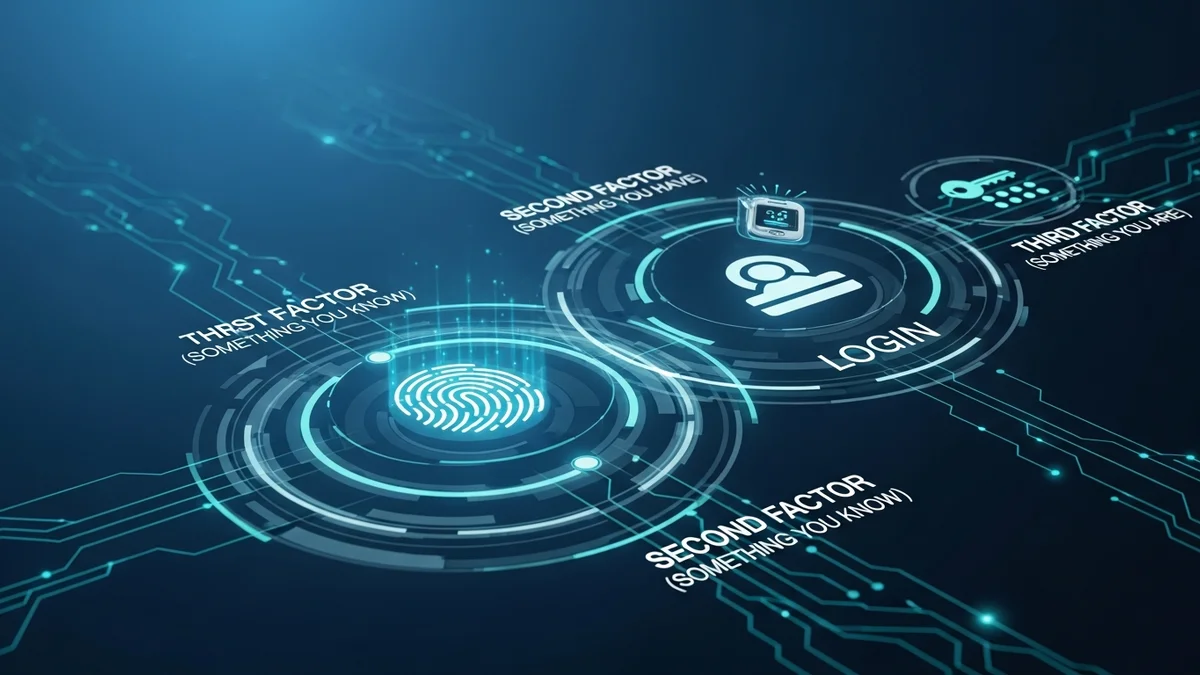
Multi-factor authentication is a security process that requires users to provide two or more independent verification factors to access an account.
These factors typically fall into three categories:
- Something you know: A password or PIN
- Something you have: A smartphone, hardware token, or security key
- Something you are: Biometrics like fingerprints or facial recognition
Traditional logins rely on just one factor: something you know. The problem? Passwords can be guessed, stolen, leaked, or reused across multiple sites. MFA ensures that even if your password is compromised, an attacker still can’t log in without the second (or third) factor.
For example, after entering your password, you might receive a one-time code on your phone or approve a push notification in an authentication app. Without access to your physical device, a hacker is locked out.
Why Passwords Alone Are No Longer Safe
The average person reuses passwords across multiple accounts. When one service is breached, attackers often attempt to reuse those same credentials elsewhere—a tactic known as credential stuffing.
Major breaches illustrate the scale of the problem:
- Yahoo (2013–2014): 3 billion accounts exposed
- LinkedIn (2012, resurfaced 2016): 165 million credentials leaked
- Collection #1 (2019): Over 770 million email addresses exposed in a massive credential dump
When these breaches occur, stolen passwords are often sold or shared on underground forums. Even years later, those credentials remain valuable to cybercriminals.
This is why monitoring your exposure matters. Tools like LeakDefend can monitor your email addresses for breaches and alert you if your credentials appear in leaked databases. But even if your password leaks, enabling MFA can stop attackers from turning that exposure into a full account takeover.
How Multi-Factor Authentication Stops Common Attacks
MFA significantly reduces the effectiveness of the most common cyberattacks:
- Credential stuffing: Even if attackers have your password, they can’t pass the second authentication step.
- Phishing: While phishing can capture passwords, many modern MFA systems use app-based approvals or hardware keys that are harder to intercept.
- Brute-force attacks: Automated password guessing becomes useless without the additional factor.
- Dark web credential sales: Stolen credentials lose much of their value if MFA is enabled.
Microsoft has reported that enabling MFA can block over 99.9% of automated account compromise attacks. That statistic alone highlights why security experts consistently recommend it as one of the most effective defensive measures available.
Types of Multi-Factor Authentication Methods
Not all MFA methods offer the same level of security. Here’s how the most common options compare:
- SMS Codes: A one-time code sent via text message. Better than nothing, but vulnerable to SIM-swapping attacks.
- Authentication Apps: Apps like Google Authenticator or Microsoft Authenticator generate time-based codes or push approvals. More secure than SMS.
- Hardware Security Keys: Physical devices like YubiKey that must be plugged in or tapped. Among the most secure options available.
- Biometric Authentication: Fingerprint or facial recognition. Convenient and generally secure when combined with device-based verification.
For most users, app-based authentication strikes the right balance between security and usability. High-risk individuals—such as executives, journalists, or developers—should consider hardware security keys for maximum protection.
Why MFA Matters More Than Ever
Cybercrime is projected to cost the world $10.5 trillion annually by 2025, according to Cybersecurity Ventures. As businesses and individuals store more sensitive data online, account security becomes a frontline defense.
Account takeovers can lead to:
- Identity theft
- Financial fraud
- Ransomware attacks
- Business email compromise (BEC)
- Unauthorized subscription charges
For individuals, a compromised email account can act as a master key, allowing attackers to reset passwords across banking, social media, and shopping platforms. For businesses, a single compromised login can open the door to massive data breaches.
That’s why combining MFA with breach monitoring is so powerful. LeakDefend.com lets you check all your email addresses for free and alerts you if they appear in known data breaches. Monitoring exposure plus enabling MFA creates a layered defense that significantly lowers your overall risk.
Best Practices for Using Multi-Factor Authentication
To maximize the benefits of MFA:
- Enable MFA on your email account first—it’s your most critical asset.
- Use an authentication app instead of SMS whenever possible.
- Store backup codes securely in case you lose your device.
- Pair MFA with a strong, unique password managed through a password manager.
- Regularly monitor your email addresses for breach exposure.
Remember: MFA is not a replacement for good password hygiene—it’s an additional safeguard.
🔒 Check If Your Email Was Breached — Monitor up to 3 email addresses for free with LeakDefend. Start Your Free Trial →
Conclusion
So, what is multi-factor authentication? It’s a simple yet powerful security measure that adds critical protection beyond your password. In an era defined by massive data breaches and automated hacking tools, relying on a single layer of defense is no longer enough.
MFA dramatically reduces the risk of account takeovers, even when passwords are exposed. When combined with proactive monitoring tools like LeakDefend, which alert you to compromised credentials, you create a layered security strategy that protects both your identity and your finances.
Cyber threats aren’t slowing down—but with multi-factor authentication enabled, you stay one step ahead.