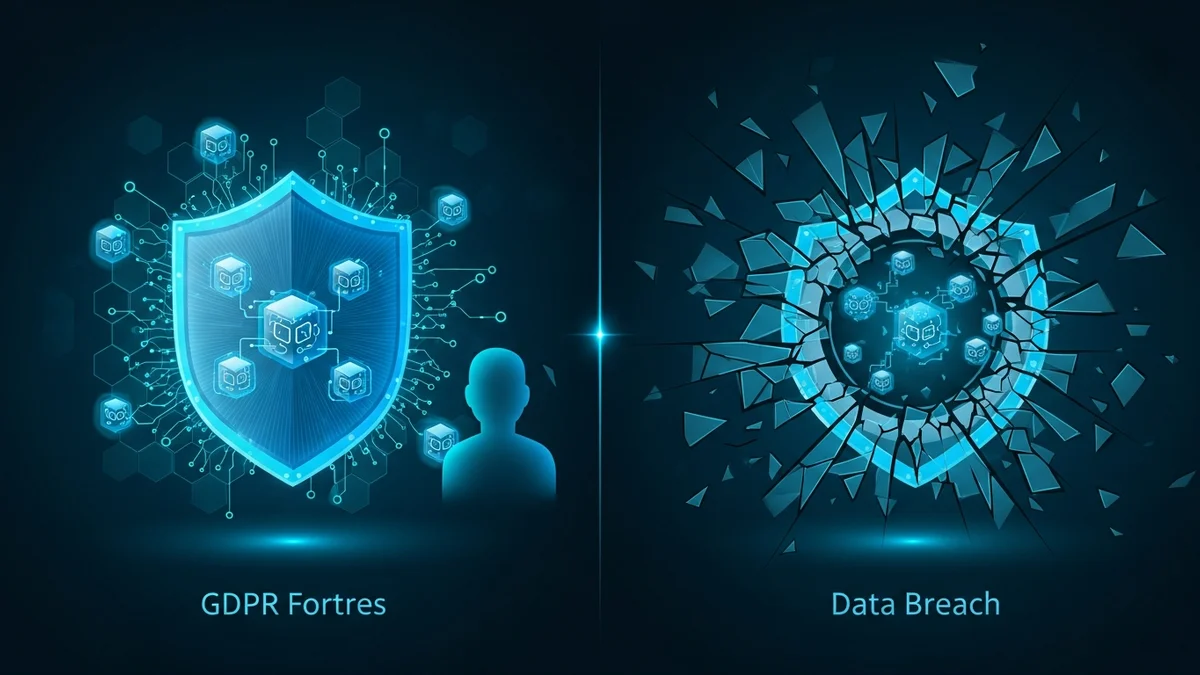
Data breaches have become a routine headline. From global corporations to local retailers, organizations of every size have exposed sensitive customer information — sometimes affecting millions of people at once. The European Union’s General Data Protection Regulation (GDPR) was designed to change that.
But what exactly is GDPR, and what rights do you have when your personal data is breached? Whether you live in the EU or interact with companies that do business there, understanding GDPR can help you protect your privacy and take action when your data is exposed.
What Is GDPR?
The General Data Protection Regulation (GDPR) is a data protection law that came into effect on May 25, 2018. It applies to all organizations that process the personal data of individuals in the European Union — regardless of where the company itself is based.
GDPR was introduced to give individuals greater control over their personal data and to hold organizations accountable for how they collect, store, and use that information.
Under GDPR, personal data includes:
- Names and email addresses
- IP addresses and location data
- Financial details
- Health information
- Online identifiers and cookies
The regulation is known for its strict enforcement. Companies can face fines of up to €20 million or 4% of their annual global turnover, whichever is higher. In 2023, Meta was fined €1.2 billion for GDPR violations — one of the largest privacy fines in history.
GDPR doesn’t just punish companies after violations. It sets clear standards for transparency, data minimization, security safeguards, and breach notification.
What Counts as a Data Breach Under GDPR?
A personal data breach under GDPR is defined as a security incident that leads to the accidental or unlawful destruction, loss, alteration, unauthorized disclosure of, or access to personal data.
This includes:
- Hackers stealing customer databases
- Accidental exposure of data due to misconfigured servers
- Sending personal information to the wrong recipient
- Ransomware attacks locking access to user data
Major breaches like the 2018 British Airways incident (affecting 400,000 customers) and the Marriott International breach (impacting over 300 million guests) demonstrate how costly and widespread data exposures can be.
Under GDPR, organizations must report certain breaches to regulators within 72 hours of becoming aware of them. If the breach poses a high risk to individuals, affected users must also be notified without undue delay.
Your Rights Under GDPR After a Data Breach
If your personal data is exposed, GDPR gives you several powerful rights:
- The Right to Be Informed
You must be told what data was breached, how it happened, and what risks it poses to you. - The Right of Access
You can request a copy of the personal data a company holds about you. - The Right to Rectification
If your data is inaccurate or incomplete, you can demand corrections. - The Right to Erasure (“Right to Be Forgotten”)
In certain situations, you can request that your data be deleted. - The Right to Restrict Processing
You can ask a company to limit how it uses your data. - The Right to Data Portability
You can request your data in a structured, machine-readable format to transfer to another provider. - The Right to Compensation
If you suffer financial or emotional damage due to a breach, you may seek compensation.
These rights empower individuals to take control rather than remain passive victims of cyber incidents.
What Should You Do If Your Data Is Breached?
If you receive a breach notification, act quickly:
- Change affected passwords immediately — and avoid reusing them elsewhere.
- Enable two-factor authentication (2FA) on important accounts.
- Monitor your financial accounts for suspicious activity.
- Watch for phishing attempts — attackers often exploit breach data to craft convincing scams.
Cybercriminals frequently use stolen email addresses and passwords in “credential stuffing” attacks. According to Verizon’s Data Breach Investigations Report, stolen credentials remain one of the most common initial attack vectors.
This is where proactive monitoring matters. Tools like LeakDefend can monitor your email addresses and alert you when they appear in known breaches, helping you respond before criminals exploit your data. LeakDefend.com lets you check multiple email addresses and track exposure across different breaches in one dashboard.
Does GDPR Protect You If You Live Outside the EU?
Yes — in many cases.
GDPR applies to any company that offers goods or services to EU residents or monitors their behavior. That means even non-European businesses may fall under GDPR if they process EU user data.
However, enforcement can be more complex when companies operate outside the EU. While GDPR has influenced privacy laws worldwide — including the California Consumer Privacy Act (CCPA) — protections vary depending on your location.
Regardless of where you live, monitoring your personal data exposure is essential. Services like LeakDefend help bridge the gap by notifying you when your information surfaces in data leaks, giving you time to take action even if legal processes move slowly.
How Companies Must Respond to Breaches Under GDPR
GDPR requires organizations to implement appropriate technical and organizational security measures. This may include encryption, pseudonymization, regular security testing, and strict access controls.
When a breach occurs, companies must:
- Assess the severity and scope of the incident
- Notify regulators within 72 hours (if required)
- Inform affected individuals when there is high risk
- Document the breach and remedial actions taken
Failure to comply can result in heavy fines and reputational damage. More importantly, transparency is legally required — companies cannot quietly conceal serious breaches.
🔒 Check If Your Email Was Breached — Monitor up to 3 email addresses for free with LeakDefend. Start Your Free Trial →
Why GDPR Still Matters Today
Since its introduction, GDPR has reshaped how organizations handle personal data. It has inspired privacy reforms worldwide and forced businesses to take cybersecurity more seriously.
Yet breaches continue to occur. In 2024 alone, millions of records were exposed globally through ransomware, misconfigured cloud databases, and insider threats. GDPR provides a legal framework — but personal vigilance remains critical.
Understanding your rights means you can demand transparency, request data access, and pursue compensation if negligence causes harm. Combining legal awareness with proactive monitoring tools significantly reduces your risk.
Conclusion
GDPR is more than a regulatory acronym — it is one of the strongest privacy protection laws ever enacted. It gives individuals the right to know when their data is compromised, to control how it is used, and to seek redress when companies fail to protect it.
If your data is breached, you are not powerless. Exercise your rights, secure your accounts immediately, and monitor your exposure going forward. Platforms like LeakDefend provide an added layer of awareness by tracking breaches linked to your email addresses and alerting you quickly.
In a digital world where data is constantly collected and traded, knowing your GDPR rights — and acting on them — is one of the most effective ways to protect your identity and financial security.