When you install a trusted software update, you probably don’t think twice about it. The vendor is reputable. The tool is essential. The update promises security improvements. But what if that very update is the attack?
Supply chain attacks have become one of the most dangerous and fast-growing cybersecurity threats. Instead of targeting victims directly, hackers compromise a trusted third-party vendor—such as a software provider, IT service company, or open-source project—and use that relationship to infiltrate thousands of downstream customers.
The result? Massive breaches that spread quietly and quickly, often before anyone realizes something is wrong.
What Is a Supply Chain Attack?
A supply chain attack occurs when cybercriminals infiltrate a company by compromising a third-party product or service it relies on. Rather than attacking hundreds or thousands of organizations individually, hackers target a single trusted supplier and use it as a gateway.
Common supply chain attack vectors include:
- Malicious software updates pushed to customers
- Compromised open-source libraries embedded in applications
- Managed service providers (MSPs) with privileged access to client systems
- Hardware tampering before delivery
The key advantage for attackers is scale. One successful compromise can cascade into thousands of victim organizations almost instantly.
Real-World Examples That Changed Cybersecurity
Supply chain attacks are not theoretical—they’ve reshaped global cybersecurity policy.
SolarWinds (2020) is perhaps the most infamous example. Attackers inserted malicious code into updates of the company’s Orion IT management software. When customers downloaded routine updates, they unknowingly installed a backdoor. The breach affected approximately 18,000 organizations, including U.S. government agencies and Fortune 500 companies.
Kaseya (2021) followed a similar pattern. Hackers exploited vulnerabilities in Kaseya’s remote management software to deploy ransomware to up to 1,500 businesses worldwide in a single coordinated attack.
Log4Shell (2021) exposed a critical vulnerability in the open-source Log4j logging library. Because Log4j was embedded in millions of applications, attackers had an enormous attack surface. Within days of disclosure, security researchers observed widespread scanning and exploitation attempts globally.
These incidents highlight a critical truth: modern software ecosystems are deeply interconnected. A weakness in one link can compromise the entire chain.
Why Supply Chain Attacks Are Increasing
Several trends are driving the rise of supply chain compromises:
- Software complexity: Modern applications rely on dozens—or hundreds—of third-party components.
- Cloud adoption: Centralized cloud platforms create high-value targets.
- Remote work: Expanded digital infrastructure increases dependency on external vendors.
- Trust-based security models: Once a vendor is approved, its software is often implicitly trusted.
Attackers have realized that breaching a single vendor can yield access to thousands of networks. From an efficiency standpoint, it’s far more profitable than attacking individual users one by one.
According to industry reports from cybersecurity firms like ENISA and IBM, supply chain attacks have grown significantly year over year since 2020, with software supply chain incidents increasing by hundreds of percent compared to pre-2020 levels.
How Hackers Compromise Trusted Software
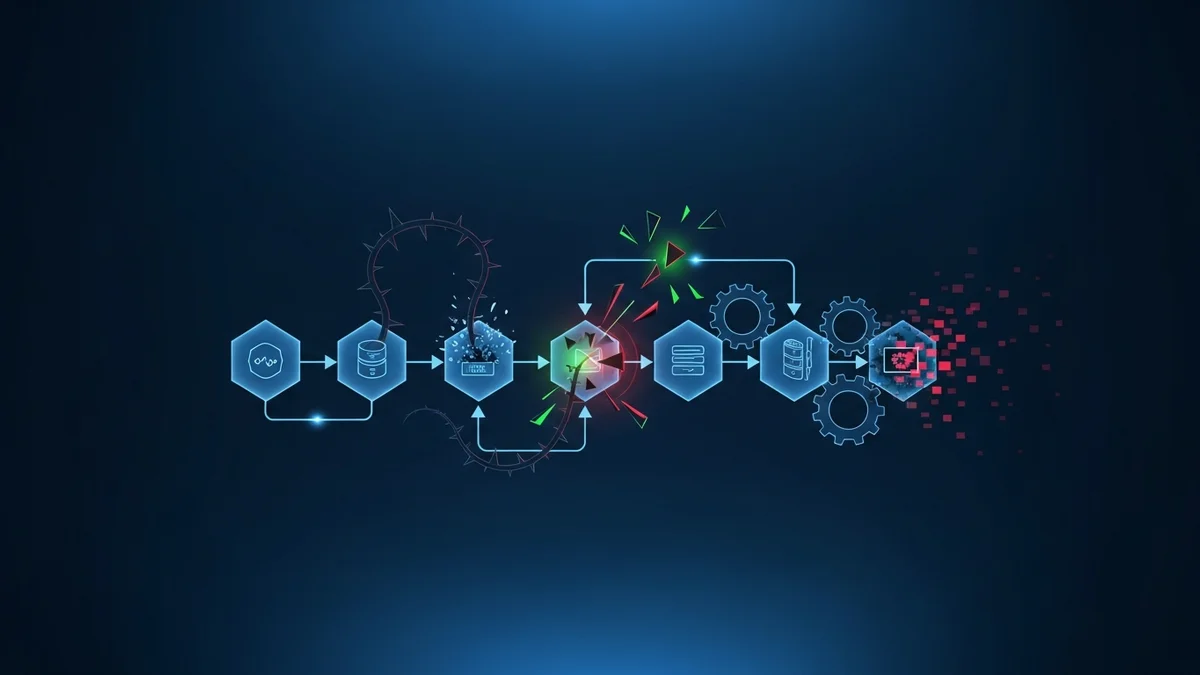
Supply chain attacks typically follow a structured process:
- Step 1: Initial compromise — Attackers exploit vulnerabilities, steal credentials, or gain insider access to a vendor’s systems.
- Step 2: Code injection — Malicious code is inserted into legitimate software builds or updates.
- Step 3: Distribution — The compromised software is digitally signed and distributed to customers.
- Step 4: Activation — The malware communicates with command-and-control servers or deploys ransomware.
Because the update is signed and appears legitimate, traditional security controls may not flag it immediately. This delay gives attackers time to establish persistence and move laterally within victim networks.
What This Means for Individuals and Small Businesses
You might assume supply chain attacks only affect governments and large enterprises. Unfortunately, that’s not true.
When software providers are compromised, the fallout often includes:
- Stolen customer data
- Exposed email addresses and passwords
- Ransomware infections
- Unauthorized access to financial systems
Even if you didn’t directly install malicious software, your data may still be exposed if a service you use was affected.
That’s why proactive monitoring matters. Tools like LeakDefend can monitor your email addresses for breach exposure across known data leaks. If a vendor you rely on suffers a compromise, early alerts give you time to reset passwords and secure your accounts before attackers exploit them.
How to Protect Yourself from Supply Chain Attacks
You can’t control the security of every vendor—but you can reduce your risk.
- Use unique passwords for every account to prevent credential reuse attacks.
- Enable multi-factor authentication (MFA) wherever possible.
- Update software promptly, but stay informed about major vulnerability disclosures.
- Monitor your accounts for suspicious activity after high-profile breaches.
- Track data exposures linked to your email addresses.
If one service in your digital ecosystem is breached, attackers often test exposed credentials on other platforms. Monitoring services such as LeakDefend.com let you check all your email addresses for free and receive alerts when new breaches are detected.
Early awareness is often the difference between a minor inconvenience and full identity theft.
🔒 Check If Your Email Was Breached — Monitor up to 3 email addresses for free with LeakDefend. Start Your Free Trial →
The Future of Supply Chain Security
Governments and cybersecurity agencies are responding. In the United States, Executive Order 14028 emphasized stronger software supply chain security practices. Globally, frameworks like Software Bills of Materials (SBOMs) are gaining traction, helping organizations understand the components inside their applications.
But systemic change takes time.
For now, supply chain attacks remain one of the most efficient ways for cybercriminals and nation-state actors to achieve large-scale impact. As digital ecosystems grow more interconnected, trust relationships will continue to be exploited.
Conclusion
Supply chain attacks flip traditional cybersecurity assumptions on their head. Instead of breaking through your defenses directly, hackers infiltrate the software and services you already trust.
From SolarWinds to Log4Shell, recent history proves that no organization is immune. A single compromised vendor can expose governments, enterprises, small businesses, and individual users alike.
While you can’t eliminate supply chain risk entirely, you can control how quickly you respond. Monitoring your digital footprint, securing your accounts with strong authentication, and staying informed about major breaches are practical steps that significantly reduce your exposure.
In a world where even trusted software can become a threat vector, vigilance is no longer optional—it’s essential.