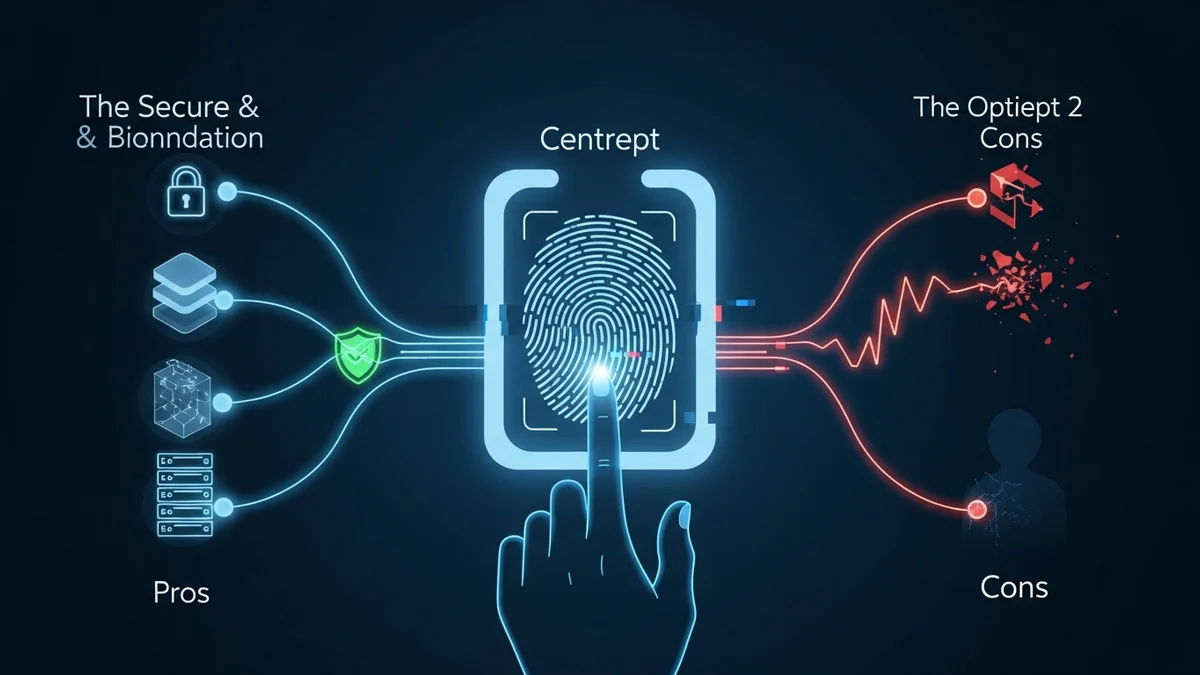
Biometric authentication has rapidly moved from science fiction to everyday reality. Millions of people now unlock smartphones with fingerprints, log into banking apps with facial recognition, or access offices using iris scans. The appeal is obvious: no passwords to remember, no codes to type.
But while biometrics offer convenience and stronger identity verification, they also introduce serious security and privacy concerns. Unlike passwords, your fingerprints and facial features can’t be changed if they’re compromised. Understanding the pros and cons of biometric authentication is essential before relying on it as your primary security method.
What Is Biometric Authentication?
Biometric authentication verifies identity using unique physical or behavioral characteristics. Common types include:
- Fingerprint recognition
- Facial recognition
- Iris or retina scans
- Voice recognition
- Behavioral biometrics (typing patterns, mouse movements)
Unlike passwords or PINs, biometrics are tied directly to your body. Modern smartphones use secure hardware enclaves to store biometric templates locally rather than in the cloud, reducing some risk. However, enterprise systems and government databases often centralize this data, creating larger targets for attackers.
The Pros of Biometric Authentication
Biometric systems have gained popularity for good reason. When implemented correctly, they offer meaningful security and usability advantages.
- Convenience and Speed
Unlocking a device with your face or fingerprint takes seconds. There’s no need to remember complex passwords or retrieve one-time codes. This convenience increases user adoption of secure authentication. - Difficult to Guess or Brute-Force
A strong password can be cracked or leaked. A fingerprint cannot be guessed through brute force. Apple reports that the probability of a random person unlocking your iPhone with Face ID is approximately 1 in 1,000,000, compared to 1 in 50,000 for Touch ID. - Reduced Password Reuse
Password reuse remains a major cause of account takeovers. Verizon’s Data Breach Investigations Report consistently shows stolen credentials as a leading breach vector. Biometrics reduce reliance on reused passwords and encourage multi-factor authentication. - Enhanced Multi-Factor Authentication (MFA)
Biometrics are strongest when combined with something you know (password) or something you have (device). Many financial institutions now require biometric verification within mobile apps, adding another layer of identity assurance.
In short, biometrics can significantly strengthen authentication—especially when layered with other security measures.
The Cons of Biometric Authentication
Despite their advantages, biometric systems introduce risks that are often overlooked.
- Biometrics Can’t Be Changed
If your password leaks, you can reset it. If your fingerprint template is stolen, you cannot replace your fingerprint. This permanence makes breaches involving biometric data particularly dangerous. - Real-World Biometric Breaches
In 2015, the U.S. Office of Personnel Management (OPM) breach exposed 5.6 million fingerprints of federal employees. In 2019, security researchers discovered that the Suprema Biostar 2 database—used in thousands of organizations—left over 1 million fingerprints and facial recognition records accessible online. These incidents demonstrate that biometric databases are not immune to misconfiguration or cyberattacks. - False Positives and False Negatives
No biometric system is perfect. False acceptance rates (allowing unauthorized users) and false rejection rates (blocking legitimate users) vary by system and conditions such as lighting or sensor quality. - Privacy and Surveillance Concerns
Facial recognition technology has raised significant privacy issues worldwide. In some jurisdictions, law enforcement agencies use facial databases for surveillance. Under regulations like the EU’s GDPR, biometric data is considered a “special category” requiring heightened protection due to its sensitivity.
Unlike password leaks, biometric breaches can have lifelong implications, making secure storage and regulation critical.
Biometrics vs. Passwords: Which Is Safer?
This isn’t a simple either-or decision. Passwords are vulnerable to phishing, credential stuffing, and brute-force attacks. Biometrics are vulnerable to spoofing, data breaches, and hardware compromise.
The strongest approach is layered security:
- Use biometrics for convenience on trusted personal devices.
- Enable multi-factor authentication whenever available.
- Maintain strong, unique passwords managed by a password manager.
Even if you rely on biometrics to unlock your accounts, those accounts are still tied to email addresses and credentials stored somewhere. If your email is compromised, attackers can reset passwords and potentially bypass protections.
That’s why tools like LeakDefend play an important role. LeakDefend.com lets you check all your email addresses for free and monitor them continuously for new data breaches. Biometric authentication protects device access—but breach monitoring protects your digital identity at its core.
When Should You Use Biometric Authentication?
Biometrics are most appropriate in the following situations:
- Unlocking personal smartphones and laptops.
- Authorizing banking transactions within secure apps.
- Accessing password managers or encrypted storage.
However, you should be cautious when:
- Biometric data is stored in centralized external databases.
- The provider lacks transparency about storage and encryption.
- You’re required to submit biometrics for low-risk services.
It’s also critical to monitor for downstream risks. Many account takeovers begin not with biometric bypass, but with leaked email credentials from unrelated data breaches. Services like LeakDefend help detect when your information appears in compromised databases, giving you time to secure accounts before attackers act.
The Bottom Line: Powerful, But Not Perfect
Biometric authentication offers undeniable advantages: speed, convenience, and resistance to common password attacks. For personal devices and properly secured systems, it significantly improves user experience without sacrificing protection.
But it is not infallible. Biometric data can be breached. Systems can be misconfigured. Privacy can be eroded. And unlike passwords, your biological identifiers are permanent.
The safest strategy is not choosing between biometrics and passwords—it’s combining biometrics with strong password hygiene, multi-factor authentication, and proactive breach monitoring.
Even the most advanced authentication won’t protect you if your email address and credentials are circulating on the dark web.
🔒 Check If Your Email Was Breached — Monitor up to 3 email addresses for free with LeakDefend. Start Your Free Trial →
Biometrics are a powerful tool in modern cybersecurity—but like any tool, they work best as part of a broader defense strategy. Stay informed, layer your protections, and make sure your digital identity is monitored just as carefully as your fingerprints.