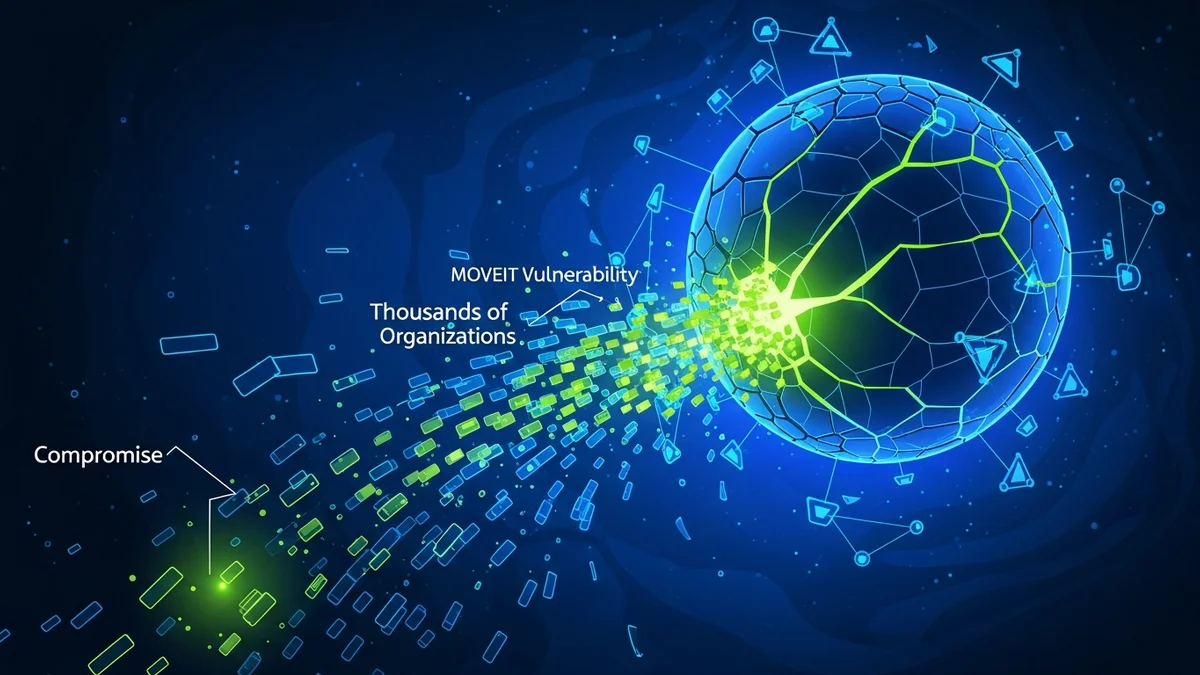
The MOVEit hack stands as one of the most consequential cyberattacks in recent history. In 2023, a single zero-day vulnerability in Progress Software’s MOVEit Transfer platform triggered a global supply chain breach that affected thousands of organizations and tens of millions of individuals.
What made the MOVEit hack so devastating wasn’t just the technical flaw — it was the widespread trust placed in managed file transfer software used to securely move sensitive data. From banks and healthcare providers to government agencies and universities, the ripple effects were enormous. Here’s how one vulnerability escalated into a worldwide data exposure crisis.
What Is MOVEit and Why Is It So Widely Used?
MOVEit Transfer is a managed file transfer (MFT) solution developed by Progress Software. Organizations use it to securely exchange large volumes of sensitive data such as payroll files, medical records, financial documents, and personal information.
MFT platforms like MOVEit are critical infrastructure in many industries because they:
- Automate secure file transfers between partners and internal systems
- Encrypt sensitive data in transit and at rest
- Ensure compliance with regulations like HIPAA, GDPR, and PCI-DSS
- Integrate with payroll providers, HR systems, and financial institutions
Because MOVEit often sits at the center of data exchange workflows, compromising it provides access to enormous amounts of aggregated sensitive information. That centralization made the 2023 vulnerability particularly dangerous.
The Zero-Day Vulnerability That Sparked the MOVEit Hack
In late May 2023, Progress Software disclosed a critical SQL injection vulnerability in MOVEit Transfer. The flaw allowed attackers to execute unauthorized database queries, effectively bypassing authentication and extracting data directly from affected systems.
The vulnerability was classified as a zero-day, meaning it was actively exploited before a patch was available. The ransomware group CL0P quickly leveraged the flaw to conduct mass exploitation campaigns.
Unlike traditional ransomware attacks that encrypt systems, the MOVEit attacks focused on data theft and extortion. Attackers exfiltrated sensitive files and then demanded ransom payments in exchange for not publishing the stolen data.
Progress released patches within days of discovery, but by then, exploitation had already spread globally.
How Thousands of Organizations Were Compromised
The scale of the MOVEit hack was unprecedented because it operated as a supply chain attack. Instead of targeting each company individually, attackers exploited a shared piece of infrastructure used by thousands of organizations.
By mid-2024, estimates suggested that:
- More than 2,600 organizations were impacted
- Over 90 million individuals had their data exposed
- Victims spanned government, finance, healthcare, education, and retail sectors
Notable affected entities included:
- U.S. government agencies such as the Department of Energy
- Major banks and financial institutions
- Healthcare providers handling protected medical records
- Payroll providers like Zellis, impacting companies such as the BBC and British Airways
Because many organizations used third-party vendors that relied on MOVEit, the breach cascaded across interconnected networks. In many cases, companies were unaware they even used MOVEit until notified by partners.
What Data Was Exposed?
The exact data varied by organization, but commonly exposed information included:
- Full names and addresses
- Social Security numbers and national ID numbers
- Dates of birth
- Financial account details
- Employee payroll records
- Health insurance and medical information
This type of data is highly valuable for identity theft, financial fraud, and phishing campaigns. Unlike passwords that can be reset, information such as Social Security numbers and birthdates cannot easily be changed, increasing long-term risk for victims.
For individuals, the breach often came as a delayed shock — many only discovered exposure months later through notification letters or media coverage. This lag underscores the importance of proactive monitoring tools. Services like LeakDefend can monitor your email addresses for breach exposure and alert you if your data appears in known leaks, helping you act quickly.
Why the MOVEit Hack Was So Difficult to Contain
The MOVEit incident highlights several structural cybersecurity challenges:
- Centralized infrastructure risk: When widely used software fails, thousands of organizations are affected at once.
- Third-party dependency: Many victims were indirectly impacted through vendors.
- Rapid mass exploitation: Automated scanning allowed attackers to compromise servers within hours.
- Data-centric extortion: Stolen data was used as leverage rather than encrypted systems.
The shift toward data theft rather than system encryption reflects a broader trend in ransomware operations. Public data leaks create reputational damage and regulatory consequences, increasing pressure on organizations to pay.
For individuals, the real danger often emerges later through phishing emails, identity theft attempts, or account takeover attacks. Checking whether your information has surfaced in breach databases is an essential first step. LeakDefend.com lets you check all your email addresses for free and monitor ongoing exposure risks in one place.
Lessons Organizations and Individuals Must Learn
The MOVEit hack reinforces several critical security lessons:
- Patch management must be immediate: Zero-day vulnerabilities require rapid response protocols.
- Vendor risk assessments are essential: Third-party tools must undergo continuous security evaluation.
- Data minimization reduces impact: Storing less sensitive data lowers breach consequences.
- Continuous monitoring is non-negotiable: Both companies and individuals need proactive detection.
Organizations must assume that supply chain attacks will continue. Attackers increasingly target software providers and cloud services to maximize impact with minimal effort.
Individuals, meanwhile, should adopt practical protective measures:
- Enable multi-factor authentication on all accounts
- Use unique, strong passwords for every service
- Monitor financial and credit reports regularly
- Track email addresses for exposure in known breaches
Tools like LeakDefend simplify this process by centralizing breach alerts and helping users understand which accounts may be at risk.
🔒 Check If Your Email Was Breached — Monitor up to 3 email addresses for free with LeakDefend. Start Your Free Trial →
Conclusion: A Warning About the Fragility of Digital Trust
The MOVEit hack demonstrates how a single vulnerability in trusted software can compromise thousands of organizations and expose millions of people to long-term risk. It wasn’t just a technical failure — it was a systemic wake-up call about supply chain security and centralized digital infrastructure.
As cybercriminal groups continue to exploit shared platforms and third-party vendors, both organizations and individuals must rethink how they manage risk. Rapid patching, vendor oversight, and data minimization are essential at the enterprise level. At the individual level, visibility is power — knowing whether your information has been exposed allows you to act before attackers do.
The MOVEit breach may eventually fade from headlines, but its lessons will shape cybersecurity strategy for years to come. In a world where one flaw can affect millions, proactive monitoring and layered defenses are no longer optional — they are essential.