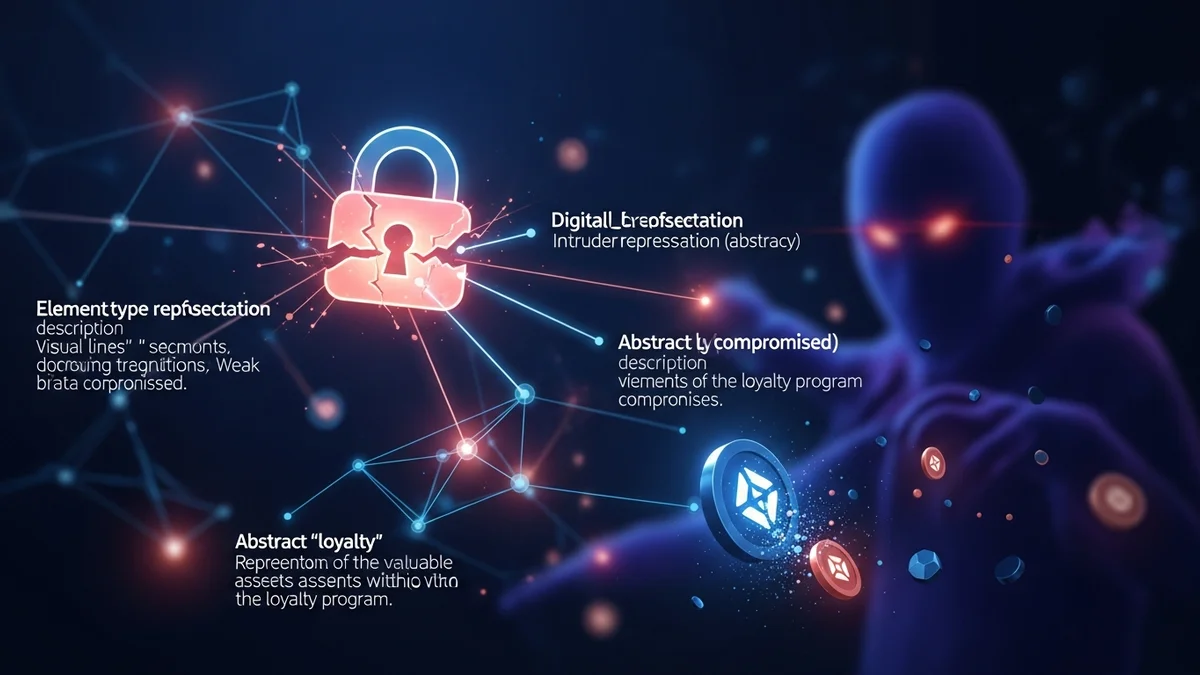
Loyalty programs promise discounts, exclusive perks, and rewards points—but behind the convenience lies a growing cybersecurity liability. Retailers, airlines, hotels, and subscription services collect massive amounts of personal and behavioral data through these programs. When that data is compromised, the fallout can be severe for both businesses and consumers.
As cybercriminals shift focus from just credit card numbers to complete digital identities, loyalty databases have become prime targets. Understanding how loyalty programs increase data breach risk is the first step toward protecting yourself.
Why Loyalty Programs Are High-Value Targets
Loyalty programs centralize sensitive customer information in one place. To personalize rewards and marketing, companies often collect:
- Full names and email addresses
- Phone numbers and home addresses
- Dates of birth
- Purchase histories and behavioral data
- Saved payment methods
- Travel itineraries (for airlines and hotels)
This creates a single, rich dataset that can be exploited for identity theft, phishing, and account takeovers. According to Verizon’s 2023 Data Breach Investigations Report, 74% of breaches involve the human element, including stolen credentials and social engineering. Loyalty accounts—often protected by reused or weak passwords—are easy entry points.
Unlike financial institutions, many retailers and hospitality brands historically invested less in cybersecurity infrastructure. That imbalance makes loyalty systems particularly attractive to attackers seeking maximum data with minimal resistance.
Real-World Breaches Linked to Loyalty Systems
Several high-profile data breaches have demonstrated how loyalty programs amplify cybersecurity risk.
Marriott International (2018) disclosed a breach affecting up to 383 million guests. Attackers accessed names, contact information, passport numbers, and Starwood Preferred Guest loyalty data. The scale of the breach showed how hospitality loyalty systems can become massive repositories of sensitive information.
Target (2013) suffered a breach that exposed data from 40 million payment cards and personal information from 70 million customers. While primarily a payment system compromise, loyalty-linked customer profiles significantly increased the volume of exposed data.
More recently, airlines and grocery chains have reported account takeover campaigns where attackers used credential stuffing—reusing passwords from previous breaches—to drain loyalty points or harvest personal data. Stolen points can be sold on dark web marketplaces, converted into gift cards, or redeemed for travel.
In each case, loyalty accounts weren’t just perks systems—they were centralized identity databases.
The Hidden Risk of Account Takeovers
Loyalty programs are especially vulnerable to account takeover (ATO) attacks. Here’s why:
- Many users reuse passwords across multiple sites.
- Loyalty accounts rarely enforce strong multi-factor authentication.
- Points and rewards have direct monetary value.
If your email and password combination appears in a previous breach, attackers can use automated tools to test those credentials against airline, retail, and hotel loyalty portals. Once inside, they may:
- Redeem or transfer points
- Change account contact details
- Access saved payment methods
- Gather personal information for identity theft
This creates a ripple effect. A compromised loyalty account can expose enough information to craft convincing phishing emails or bypass identity verification elsewhere.
That’s why monitoring your exposed credentials matters. Tools like LeakDefend can monitor your email addresses for breaches and alert you if your data appears in newly discovered leaks, helping you secure accounts before attackers exploit them.
Data Minimization vs. Marketing Incentives
From a cybersecurity standpoint, the safest data is data that doesn’t exist. However, loyalty programs are built on maximizing data collection. The more a company knows about customer habits, the more precisely it can target promotions.
This creates a tension between marketing value and security risk. Companies often store years of historical transaction data because it drives revenue insights. But retaining large datasets increases:
- Attack surface area
- Regulatory exposure under laws like GDPR and CCPA
- Financial liability in the event of a breach
IBM’s Cost of a Data Breach Report consistently finds that the average breach costs millions of dollars, factoring in regulatory fines, remediation, legal fees, and reputational damage. Loyalty databases, due to their size and sensitivity, significantly amplify these costs.
For consumers, the risk is less visible but equally serious. A single loyalty breach can expose enough personal information to fuel years of targeted scams.
How Consumers Can Reduce Loyalty Program Risk
You don’t have to abandon loyalty programs entirely—but you should treat them as financial accounts.
- Use unique passwords for every loyalty account.
- Enable multi-factor authentication (MFA) whenever available.
- Avoid storing payment methods unless absolutely necessary.
- Regularly check account activity for unauthorized redemptions.
- Limit optional profile data such as birthdates or secondary contact information.
Most importantly, monitor whether your email addresses have been exposed in other breaches. If attackers already have your credentials, your loyalty accounts are at risk—even if the loyalty provider itself hasn’t been hacked.
LeakDefend.com lets you check all your email addresses for free and monitor up to three accounts for breach exposure, helping you identify vulnerabilities before they’re exploited.
Why Businesses Must Rethink Loyalty Security
For organizations, loyalty programs must be treated as high-risk infrastructure. Best practices include:
- Enforcing strong password and MFA policies
- Encrypting sensitive customer data at rest and in transit
- Implementing anomaly detection for suspicious point transfers
- Limiting data retention to essential information
- Conducting regular third-party security audits
Failing to secure loyalty systems doesn’t just risk financial penalties—it erodes customer trust. Consumers are increasingly aware of data privacy issues, and brand loyalty can quickly evaporate after a major breach.
Ultimately, loyalty programs are no longer simple marketing tools. They are complex data ecosystems that require enterprise-level security controls.
🔒 Check If Your Email Was Breached — Monitor up to 3 email addresses for free with LeakDefend. Start Your Free Trial →
Conclusion
Loyalty programs create convenience and value—but they also consolidate personal data into highly attractive targets for cybercriminals. From large-scale breaches like Marriott to everyday credential stuffing attacks, these systems have repeatedly proven to be cybersecurity liabilities when not properly secured.
For consumers, the solution starts with stronger password hygiene, multi-factor authentication, and proactive breach monitoring. For businesses, it requires treating loyalty databases with the same rigor as financial systems.
Your rewards points may seem harmless, but the personal data behind them is not. In today’s threat landscape, every loyalty account is part of your digital identity—and it deserves serious protection.