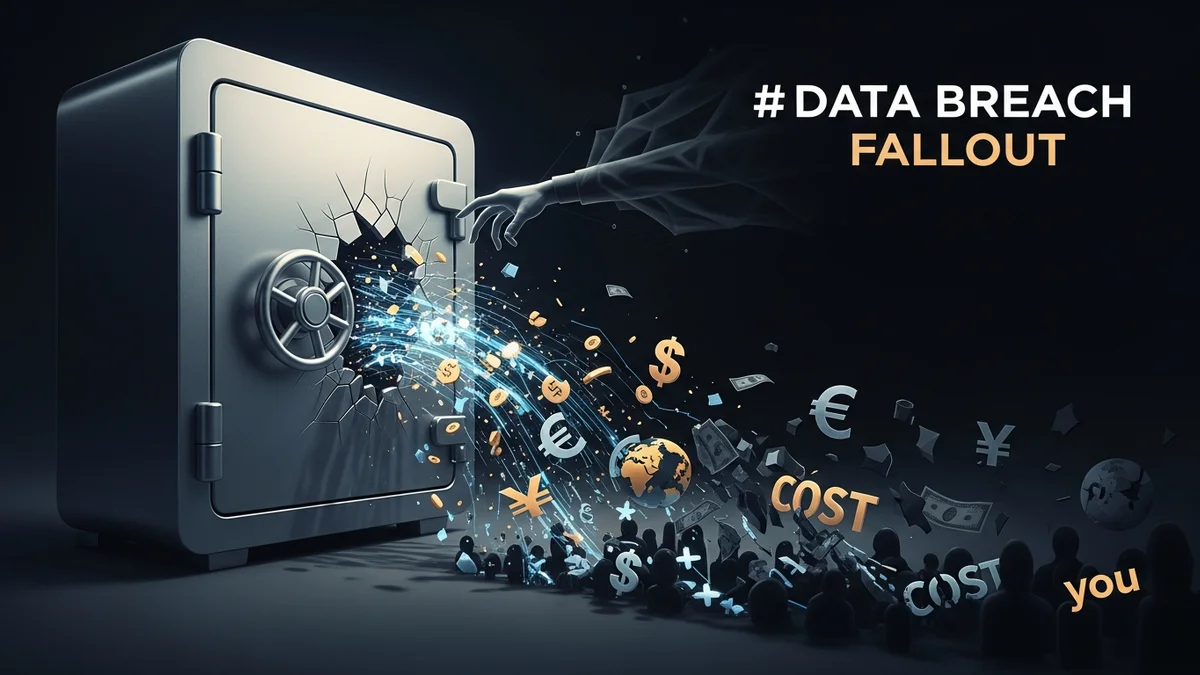
Data breaches aren’t just headline-grabbing scandals—they’re billion-dollar disasters. In 2023 alone, the global average cost of a single data breach reached $4.45 million, according to IBM’s annual Cost of a Data Breach Report. In the United States, that number climbed to nearly $9.5 million per breach.
But here’s the part most people overlook: companies don’t absorb these costs quietly. They pass them on—to customers, employees, and investors. Higher prices, reduced services, identity theft, and financial fraud are all downstream effects of poor data security.
In other words, when companies lose your data, you often pay the price.
The True Financial Impact of Data Breaches
When a company suffers a breach, the costs go far beyond technical cleanup. The financial damage typically includes:
- Incident response and forensics to investigate what happened
- Legal fees and regulatory fines (GDPR fines can reach 4% of global revenue)
- Customer notification and credit monitoring services
- Lawsuits and settlements
- Operational downtime
- Reputational damage and lost business
Consider some well-known examples:
- Equifax (2017): The credit bureau breach exposed sensitive data of 147 million Americans. The company agreed to a settlement of up to $700 million.
- Marriott (2018): A breach affecting 339 million guest records led to over $100 million in fines under GDPR.
- Target (2013): The retailer paid more than $18 million in settlements, not including legal and remediation costs.
And these are just public figures. The long-term reputational damage can reduce market value by billions more.
How Companies Pass the Cost to Consumers
Businesses rarely absorb breach costs out of goodwill. Instead, they recover losses through indirect means that affect consumers directly.
1. Higher Prices
Companies facing regulatory fines or lawsuit settlements often increase product or service prices. Cybersecurity investments, insurance premiums, and compliance upgrades all get built into operating costs—which are passed along to customers.
2. Reduced Services
After major incidents, organizations may cut back on innovation, customer support, or perks to offset financial damage.
3. Increased Fees
Banking and financial institutions hit by fraud spikes may introduce new account fees or raise transaction charges.
Even if you weren’t directly affected by the breach, you may still be paying for it through higher costs and reduced value.
The Hidden Cost: Identity Theft and Fraud
For individuals, the financial consequences can be even more personal.
According to the FTC, identity theft reports consistently exceed 1 million cases per year in the United States alone. Many of these cases originate from breached data—email addresses, passwords, Social Security numbers, and financial information exposed in corporate hacks.
Once your data is leaked, it can circulate on the dark web indefinitely. Cybercriminals use stolen credentials for:
- Account takeovers
- Credit card fraud
- Loan and tax fraud
- Phishing and social engineering attacks
- Credential stuffing across multiple platforms
One breach can trigger a cascade of attacks years later. That’s why proactive monitoring matters. Tools like LeakDefend can monitor your email addresses for breaches and alert you when your information appears in known data leaks—helping you act before criminals do.
Why Data Breaches Keep Getting More Expensive
Data breaches are not just increasing in frequency—they’re becoming more costly for several reasons:
- Stronger privacy regulations such as GDPR and CCPA impose steep penalties.
- More sensitive data stored online increases exposure.
- Ransomware attacks now include data extortion and public leak threats.
- Remote work environments expand attack surfaces.
IBM reports that breaches involving stolen credentials take the longest to detect and contain—often more than 300 days. The longer a breach goes unnoticed, the more expensive it becomes.
For consumers, this delay means personal data may already be circulating online long before official notifications arrive. By the time a company informs you, attackers may have exploited your credentials multiple times.
What You Can Do to Protect Yourself
You can’t control how well companies secure their systems—but you can reduce your personal risk.
- Use unique passwords for every account.
- Enable multi-factor authentication (MFA) wherever possible.
- Regularly monitor your email addresses for exposure in breaches.
- Act immediately if you learn your data has been compromised.
Monitoring is especially important because breaches are often discovered months after they occur. LeakDefend.com lets you check all your email addresses for free and track whether they’ve appeared in known data breaches. Early detection gives you a crucial window to change passwords, secure accounts, and prevent fraud.
🔒 Check If Your Email Was Breached — Monitor up to 3 email addresses for free with LeakDefend. Start Your Free Trial →
The Bigger Picture: Data Security Is Everyone’s Problem
Data breaches cost companies billions each year—but the ripple effects impact everyone. Consumers pay through higher prices. Victims suffer identity theft and financial stress. Investors see market value decline. Employees face layoffs after major security failures.
Cybersecurity is no longer just an IT issue—it’s an economic issue.
Until organizations dramatically improve how they secure and monitor data, breaches will remain a costly reality. The best defense for individuals is awareness and proactive monitoring. By staying informed and using tools like LeakDefend to track your exposure, you can reduce the personal cost of corporate data failures.
Because when companies lose your data, you shouldn’t have to lose your peace of mind.