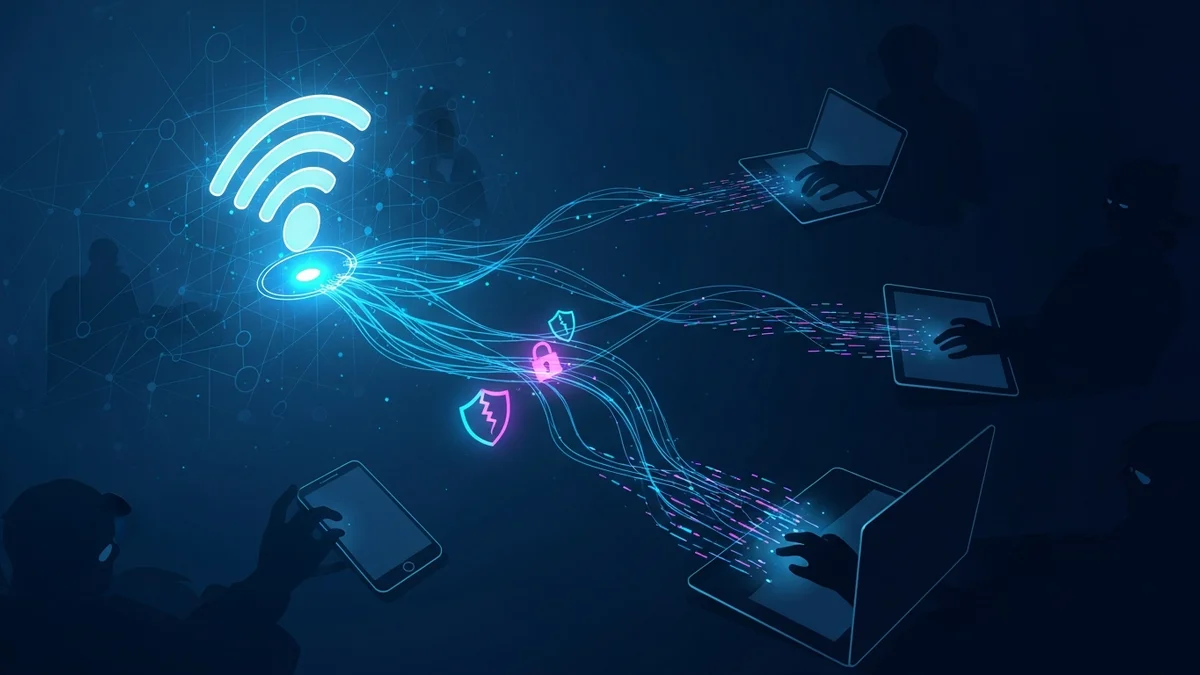
Free Wi-Fi networks are everywhere—coffee shops, airports, hotels, shopping malls, even public transportation. They’re convenient, fast, and often essential when you’re traveling or working remotely. But behind that “Free Wi-Fi” sign can hide serious cybersecurity risks. The hidden dangers of free Wi-Fi networks range from password theft to full-blown identity fraud, and most users have no idea how exposed they really are.
Cybercriminals specifically target public Wi-Fi because it’s one of the easiest ways to intercept personal data. If you’ve ever logged into your email, social media, or banking app while connected to public Wi-Fi, your sensitive information may have been at risk. Here’s what you need to know—and how to protect yourself.
Why Free Wi-Fi Networks Are a Hacker’s Playground
Public Wi-Fi is inherently less secure than your home network. In many cases, these networks are either unencrypted or protected by a shared password that dozens (or hundreds) of people know. That makes it significantly easier for attackers to intercept traffic.
According to a 2023 cybersecurity survey by Forbes Advisor, over 40% of respondents reported having their information compromised while using public Wi-Fi. Even more concerning, many victims didn’t realize it happened until weeks or months later.
Hackers exploit free Wi-Fi networks because:
- Traffic is often unencrypted, allowing attackers to read data in transit.
- Multiple users share the same network, increasing opportunities for infiltration.
- Users are less cautious when connecting in public places.
Once connected, attackers can capture login credentials, emails, private messages, and even payment details.
Man-in-the-Middle Attacks: Silent Data Theft
One of the most common threats on public Wi-Fi is a Man-in-the-Middle (MITM) attack. In this scenario, a hacker positions themselves between you and the website or service you’re accessing. Instead of communicating directly with the site, your data passes through the attacker first.
This allows them to:
- Steal usernames and passwords
- Capture credit card numbers
- Monitor email conversations
- Inject malicious code into websites
Because everything appears normal on your device, you may never suspect anything. High-profile breaches have often started with stolen credentials harvested from unsecured connections. Once attackers gain access to an email account, they can reset passwords for other services, leading to a domino effect of account takeovers.
Evil Twin Networks: The Fake Wi-Fi Trap
Another hidden danger of free Wi-Fi networks is the “Evil Twin” attack. This happens when a hacker creates a fake hotspot that looks legitimate—such as “Airport_Free_WiFi” or “Starbucks_Guest.”
Unsuspecting users connect to the fake network, believing it’s official. In reality, all their internet traffic is routed directly through the attacker’s device.
In busy public areas, it’s almost impossible to visually distinguish a real network from a malicious one. The FBI has repeatedly warned travelers about this tactic, particularly in airports and hotels where people urgently need internet access.
Once connected to an evil twin network, attackers can collect login credentials within minutes. Stolen email accounts are especially valuable because they often contain password reset links, personal information, and sensitive documents.
Session Hijacking and Account Takeovers
Even if you don’t enter your password, you’re not necessarily safe. Many websites use session cookies to keep you logged in after authentication. On unsecured Wi-Fi, attackers can steal these session cookies and impersonate you without ever knowing your password.
This technique, known as session hijacking, has been widely documented for years. Tools designed for intercepting traffic are easy to find online, lowering the barrier to entry for cybercriminals.
Once attackers access one account, they often search for reused passwords across other services. According to Verizon’s Data Breach Investigations Report, over 80% of hacking-related breaches involve stolen or weak credentials.
This is where proactive monitoring becomes critical. Tools like LeakDefend can monitor your email addresses for breach exposure, alerting you if your credentials appear in leaked databases. If a password was captured on public Wi-Fi and later surfaces in a breach, early detection can prevent further damage.
Financial Fraud and Identity Theft Risks
The ultimate goal for many attackers is financial gain. If you access online banking or shopping platforms on public Wi-Fi, you may be exposing payment details or personal identifiers.
Identity theft cases remain a significant global issue. In the United States alone, the Federal Trade Commission received over 1 million identity theft reports in 2023. While not all originate from public Wi-Fi, unsecured networks are a known contributor.
With just a few pieces of stolen information—your email address, password, and date of birth—criminals can:
- Open new credit accounts in your name
- Submit fraudulent tax returns
- Access subscription services and resell accounts
- Launch phishing attacks targeting your contacts
Because email accounts act as gateways to other services, monitoring them is essential. LeakDefend.com lets you check all your email addresses for free and receive alerts if they appear in known data breaches.
How to Protect Yourself on Public Wi-Fi
While the risks are real, you don’t have to avoid public Wi-Fi entirely. You simply need to use it wisely.
- Use a VPN: A reputable virtual private network encrypts your traffic, making it much harder for attackers to intercept data.
- Avoid sensitive transactions: Don’t access banking or enter payment details unless absolutely necessary.
- Verify network names: Confirm the official Wi-Fi name with staff before connecting.
- Enable HTTPS: Ensure websites use HTTPS encryption (look for the padlock icon).
- Turn off auto-connect: Prevent your device from automatically joining unknown networks.
- Use multi-factor authentication (MFA): Even if your password is stolen, MFA adds another layer of protection.
Additionally, ongoing breach monitoring adds a safety net. If your credentials are ever exposed—whether through public Wi-Fi interception or a third-party breach—services like LeakDefend can notify you quickly so you can reset passwords and secure accounts before attackers escalate.
🔒 Check If Your Email Was Breached — Monitor up to 3 email addresses for free with LeakDefend. Start Your Free Trial →
Conclusion: Convenience Shouldn’t Cost You Your Privacy
Free Wi-Fi networks offer convenience, but they come with hidden dangers that many users underestimate. From man-in-the-middle attacks and evil twin hotspots to session hijacking and identity theft, the risks are real—and well-documented.
The good news is that awareness dramatically reduces your vulnerability. By using a VPN, enabling multi-factor authentication, and avoiding sensitive transactions on public networks, you can significantly lower your risk. Pair those habits with proactive breach monitoring, and you create a strong defense against long-term damage.
Public Wi-Fi isn’t going away. But with the right precautions—and smart tools—you can stay connected without putting your personal data on the line.